


From the outside, the little house looks perfect: It sits in a clearing in Savoy, Massachusetts, surrounded by tall spruce trees. The house is gray with tidy white trim and a narrow brick chimney. In winter, when the area is blanketed with snow, it looks like an iced gingerbread house in the woods.
Inside, the house is an unfinished story. Homeowner John Carbin has been building it for years. He’s an aircraft mechanic and former Black Hawk crew chief; he likes hands-on projects. He had no trouble getting a building permit from the Town of Savoy. The electrical permit hit “a little bit of a snag,” he says, “but eventually I was good there.” He and his wife live an hour away in the City of Westfield. The home in Savoy is meant to be their rural weekend escape. Maybe more, when John retires.
But the plumbing permit is a problem. John’s application hit a dead end—“just a big wall,” he says.
The Code of Massachusetts Regulations says only “properly licensed individuals” can get a permit to do plumbing work. Getting a plumbing license takes years: You need 5,000 apprenticeship hours and 550 education hours. It’s not something a homeowner can do for a one-off project.
That makes Massachusetts—the birthplace of the American Revolution—the only state in the country where a homeowner can’t do plumbing work on his own house.
John was denied a permit in 2023. Frustrated, he addressed a letter to Charlie Baker, then-governor of Massachusetts.
“When our country was first formed, I believe freedom was rather important,” he wrote. Barring a homeowner from working on his own home would have been “inconceivable” to the Founders, John said. “I believe it is unconstitutional and wrong that the state took away this right.”
A Familiar Science
It took a hundred years for indoor plumbing to go from being a luxury in America to the standard for middle-class homes.
First the marvel came to luxury hotels. In 1829, Tremont House opened in Boston with the first-in-the-nation indoor plumbing for hotel guests, who tended to be “gentlemen of fortune who travel for pleasure.” Running water was powered by steam pumps in an intricate system that carried water from a holding tank on the roof to the ground floor. Wealthy Boston families sometimes came to the hotel to bathe because their own mansions weren’t yet outfitted with pipes. By the 1850s, that was beginning to change.
But it wasn’t until the 1950s that most of America had indoor plumbing—thanks, in part, to homeowners installing it themselves. “More than 100,000 families have built their own homes the past few years, doing all the work, or most of it, themselves,” Popular Mechanics magazine boasted in 1956. “Right now, one of every five homes being built is at least partially owner-built.” That same issue had a section on “How to Design and Install Plumbing.”
in Massachusetts, anyone who does their own plumbing without a license is breaking the law.
In the bestselling book Zen and the Art of Motorcycle Maintenance, Robert Pirsig learns how to fix his own motorcycle after being horrified by professional mechanics’ cavalier treatment of it. His dawning understanding of his machine changes his way of engaging with the world. He notices that his friends are living with a constantly dripping faucet; they don’t know how to fix it and seem visibly frustrated by their inability to control their home. “All this technology has somehow made you a stranger in your own land,” Pirsig writes. To find peace of mind, he argues, you must become absorbed in the active maintenance of the things you need to live the way you want.
That’s what people are doing when they work on their homes. It’s not just about cutting costs. It’s about understanding and building, piece by piece, the systems of your own life.
Today, John Carbin says, “Anyone who’s mechanically inclined can pretty much do their own plumbing. Even if they’re not mechanically inclined, I guess they can do plumbing.” Flexible plastic pipes have replaced copper, removing the need for soldering with a torch. Do-it-yourself plumbing has become its own genre on YouTube, with videos speaking directly to an enthusiastic following. “Today we talk about laying out the drain lines in a bathroom in around 4 minutes,” declares one video with 1.2 million views. Another video—on how to install “ALL Connections to Fittings in a WHOLE HOUSE!”—has over 3 million views.
“You make me feel like I can do anything,” one commenter writes underneath.
But in Massachusetts, anyone who does their own plumbing without a license is breaking the law.
A Deprivation of Liberty
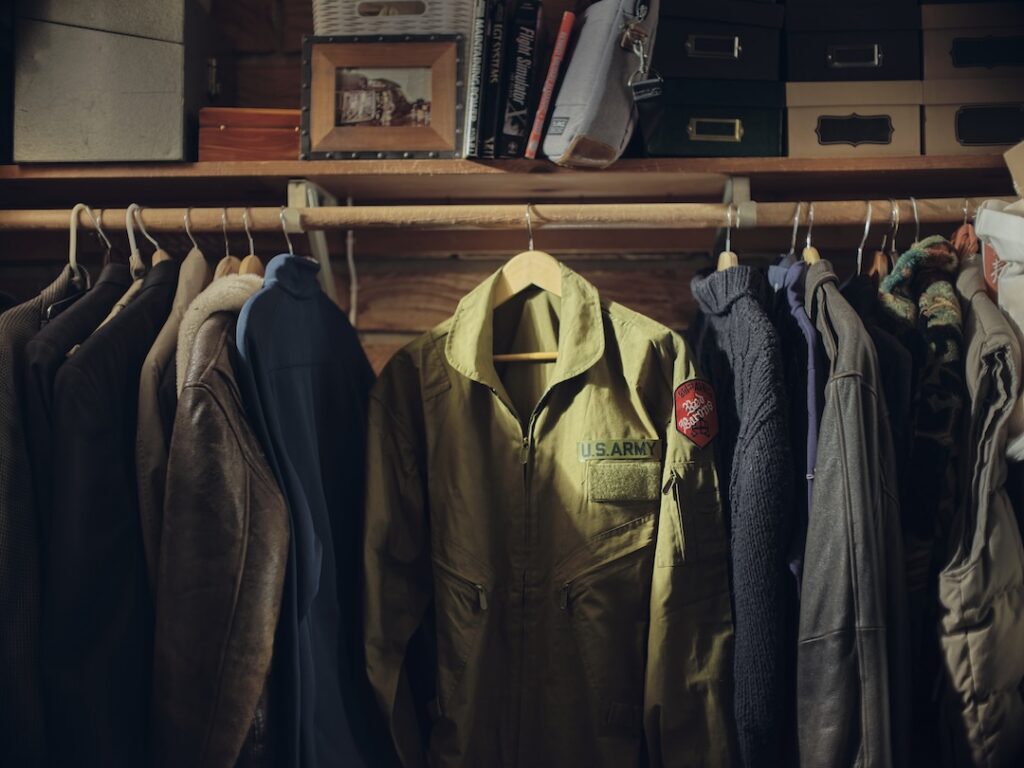
It’s easy to see how a man like John would feel comfortable installing his own plumbing. He enlisted in the U.S. Army when he was 18 years old. “I just wanted someplace to go,” he says. That “someplace” ended up being Camp Humphreys, South Korea, about 55 miles south of Seoul. John was a helicopter mechanic. Working with Black Hawks was “a blast,” he remembers. After the Army, he returned to New England and began working for a company that overhauls jet engines.
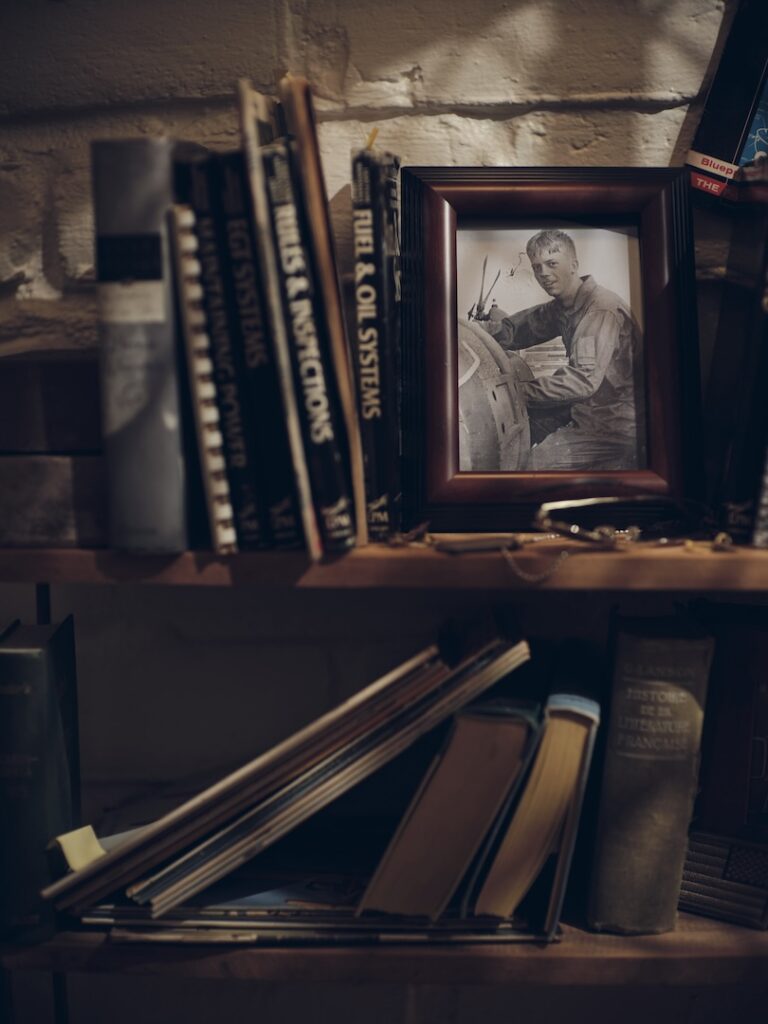
The property in Savoy was empty land when John and his wife bought it. “We camped out up here,” he recalls. “Eventually we wanted to build a house.” Savoy is quiet, with only about 20 people per square mile. “There’s nothing around there,” John says. He likes it quiet.
But the house still needs plumbing.
After the Town refused to give him a plumbing permit, John decided to sue the Commonwealth of Massachusetts, the Board of State Examiners of Plumbers and Gas Fitters, and the Town of Savoy. His wife said she was fine with him pursuing the lawsuit—as long as he didn’t spend too much money on lawyers. So he represented himself.
“I research the crap out of everything whenever I do it,” he says.
To John, banning a homeowner from working on his own home is a clear deprivation of liberty—and the Fourteenth Amendment says that “[n]o state shall… deprive any person of life, liberty, or property without due process of law.” In his brief to the district court, John emphasized that plumbing is done across the United States by homeowners like him. “How do the risks in plumbing compare to other things that citizens are allowed to do,” he asked, “like mowing their lawn, working on their car or electrical wiring[?]”
When plumbing was first regulated in the late 1800s, John pointed out, less than one percent of all households had plumbing. “Today education, materials, and the ability to learn how to do anything is right at our fingertips.” There is no reason, he argued, that Massachusetts homeowners shouldn’t enjoy the freedom to build and maintain their own homes “just as the frontiersmen did.”
The district court dismissed John’s lawsuit without looking at his complaint. The state was asserting an interest in “health or safety,” the court said. Therefore the plumbing ban was rational.
John appealed to the First Circuit. This time, in his brief, he posed a hypothetical to the court:
Imagine for a moment if the Massachusetts Bar Association made it unlawful for citizens in Massachusetts to represent themselves in federal court. Some judges would be pleased to only deal with lawyers. I truly understand where they’re coming from. The Board [of State Examiners of Plumbers and Gas Fitters], in a sense, took away citizens’ rights to “represent” themselves within the curtilage of their own home.
The First Circuit didn’t listen: It agreed with the district court and summarily dismissed John’s case.
Petitioning the Supreme Court
John was already following Pacific Legal Foundation. “The Sackett case interests me,” he explains. He reached out to PLF about his case. “This is property rights,” he says. “It seems really basic to me. And that’s what Pacific Legal Foundation does.”
PLF took on John’s case and filed a cert petition with the U.S. Supreme Court. If the Court takes the case, it would be a major test of “rational basis review.” Because the right to work on your own home isn’t explicitly listed in the Constitution, and the Supreme Court hasn’t yet called it a fundamental right, the government only needs to have a rational basis for restricting it. Courts generally defer to the government’s reasoning. In John’s case, the courts accepted at face value the government’s statement that plumbing your own home is a threat to public health and safety under all circumstances—which John finds ridiculous.
The Constitution demands more when the government takes away your rights, and so PLF is arguing that the Supreme Court should revisit the rational basis test. It’s also arguing that repairing one’s home has a long history in the United States, meaning it should be treated as a fundamental right and enjoy more judicial scrutiny.
It’s now been several years since this saga began. John’s home in the Savoy woods isn’t legally livable yet, not without plumbing. At one point John got tired of waiting on the government. He figured, forget it—he’d give in and hire a professional plumber.
He found a guy. The plumber quoted him $13,000 and agreed on a start date. Then he never showed up. The check sat unclaimed on the wooden stove in the middle of the unfinished home.
The Supreme Court hasn’t yet announced whether it will hear John’s case.