

“The nuclear family was a mistake,” David Brooks declared in The Atlantic in 2020. He meant it not as an attack on the family but as nostalgia: People once lived surrounded by family across multiple generations. Now most don’t. Kids once grew up listening to Grandma tell stories at the dinner table. Now Grandma lives an airplane ride away; when she visits, she stays in a hotel. “[W]hen people who are raised in developed countries get money, they buy privacy,” Brooks writes.
But a lingering sadness lurks, an awareness that life is emotionally vacant when family and close friends aren’t physically present, when neighbors aren’t geographically or metaphorically close enough for you to lean on them, or for them to lean on you. Today’s crisis of connection flows from the impoverishment of family life.
There’s an antidote to this crisis: additional space for family to be together. That’s what East Palo Alto homeowner Wesley Yu wants.
Wesley and his wife live in a 1,000-square-foot home with their toddler daughter. They want their parents to be able to visit frequently and spend time with their granddaughter. Time moves so fast when your child is young: Soon she’ll be five, then ten, with her early memories already set. When you’re a parent, you rush to create room for family memories so that later, when your child is grown, she won’t just remember a house with her parents; she’ll remember a home filled with family members who love her.
Wesley split his lot and applied for a permit to build a new home and accessory dwelling unit (ADU). The new structures would turn the family property into a multigenerational haven.
At first the City approved Wesley’s plan. But then a housing project manager for the City informed Wesley that to get his permit, “I either had to pay $55,000 or I’d be required to build below-market-rate housing,” he remembers. If he chose to build below-market housing, there was a catch: “The worst part of it was the City would have the right to choose the tenant,” he says. “I just didn’t think that was right.”
Welcome to inclusionary housing in California.
A Broken Policy
Across the country, nuclear families are building additional space for grandparents to stay or live in. “Instead of moving in with the kids, some seniors are moving to their kids’ backyards—into accessory dwellings made for them,” Washingtonian reported in 2025. The ideal modern home has privacy, yes, but it also has a place for extended family: That’s what allows the layered experience of multigenerational living.

Most cities recognize the value of multigenerational households. In 2023, New York City offered up to $395,000 in funding for people building backyard cottages or in-law suites. Portland, Oregon, is so eager for people to build that it waives typical permit fees for ADUs and expedites its permitting process. In California—where ADUs are sometimes called casitas, or little houses—annual permits skyrocketed from 1,336 in 2016 to 26,924 in 2023—a twenty-fold surge in less than a decade.
But inclusionary zoning is a problem for multi-unit projects like the Yus’.
The Housing Department continued to cold-call me, demanding the fee.
Wesley Yu
Picture this: You’re a City official who wants more affordable housing in your area. Your solution? Everyone who wants a building permit for multi-unit housing has to make units available at below-market rents to a City-approved tenant or pay tens of thousands of dollars into the City’s affordable housing fund.
Inclusionary zoning is a typical government invention: a policy that is simultaneously as facile as a child’s and too convoluted to make sense. Housing doesn’t magically become affordable when you prevent a family like the Yus from building space for grandparents. All you’ve done is make it harder to build—which may be the point.
“Sometimes, policies have unintended consequences or unforeseen downsides,” Matthew Yglesias writes in his Substack. “Other times, I’m not sure the downsides or adverse consequences are unforeseen or unintended at all. This is how I feel about so-called ‘inclusionary zoning.’”
The Lawsuit
Wesley didn’t immediately decide to take legal action against East Palo Alto. “I knew I had some time to pay the fee, if it really came down to that,” he says. He emailed the City housing project manager, noting his project would actually “help[] the city build much-needed housing units, and the in-lieu fee would actually DECREASE affordability of housing.” The housing project manager replied:
[Your] project will not be eligible to receive a building permit until it has completed the necessary steps with the Housing Team. This includes submissions and approval of the required Inclusionary Housing Plan.
Meanwhile, the City started calling Wesley to arrange payment of the $55,000 fee. It was the phone calls that pushed Wesley over the edge. “The Housing Department continued to cold-call me, demanding the fee,” Wesley says. “I got really annoyed. One day after they cold-called me, I decided to look more into it.”
That’s when he decided to do something about the ordinance. “I thought I had a chance to make some change,” he says.
He knew about Pacific Legal Foundation from following Sheetz v. El Dorado County at the Supreme Court, where PLF represented homeowner George Sheetz in a successful bid to challenge a $23,000 impact fee.
Last July, PLF filed Wesley’s federal lawsuit against East Palo Alto. “The City’s Inclusionary Housing Ordinance seeks to do the impossible,” we wrote in the complaint.
[I]t tries to make housing more affordable by making it more costly. More fundamentally, by imposing permit fees that have nothing to do with the actual impacts of Wesley’s development, the Ordinance is unlawful. The City cannot use its land-use permitting authority to take money or property from permit applicants in order to address problems that those applicants do not create.
Victory for the Yu Family
Four months after PLF filed the lawsuit, the City amended its ordinance to exclude projects like the Yus’. Wesley’s lawsuit is settled: He no longer has to pay the $55,000 inclusionary housing fee.
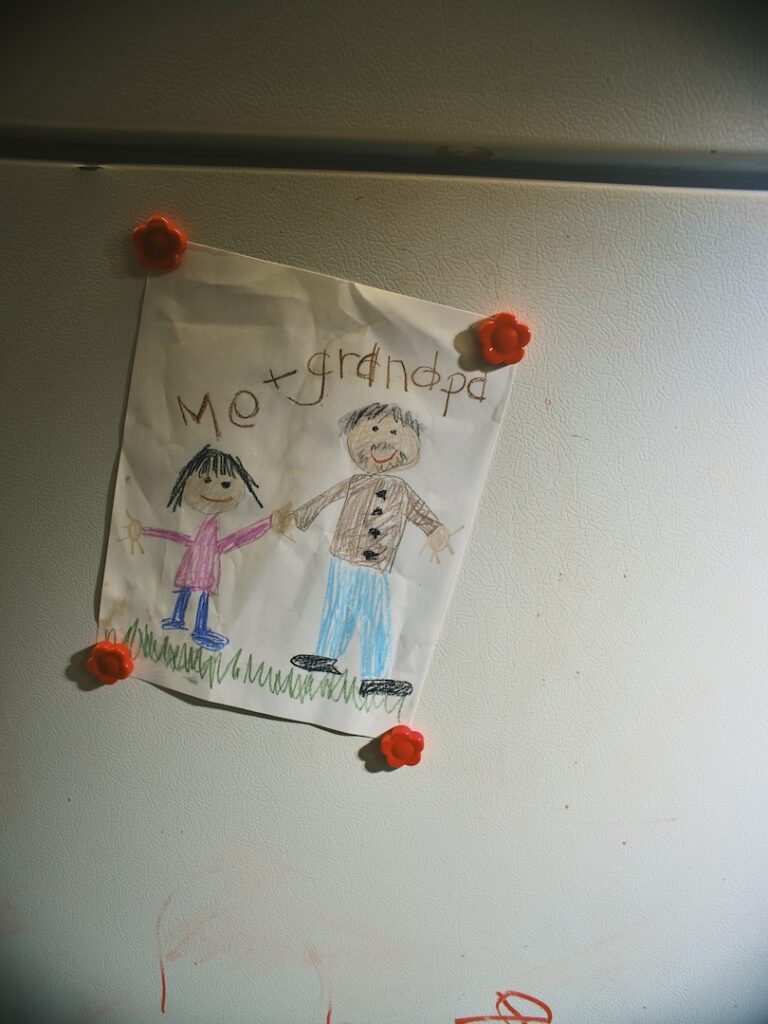
Wesley wasn’t surprised the City surrendered so quickly. “This was not a fight they wanted to take on,” he says. He’s happy: His family’s building project is now moving forward.
Sharon Curtin, author of Nobody Ever Died of Old Age, complained in 1973 that grandchildren were spending less and less time with their grandparents. “I can only speculate on what this increasing separation between grandparent and grandchild will mean,” she wrote in The New York Times.
I suppose I simply feel you cannot have respect for and knowledge of all the stages of human life in the abstract; I believe contact with living representatives of the past and the future is necessary. Otherwise it is too easy to dismiss the past as meaningless and regard the future as something that never happens.
For the sake of families like the Yus and the well-being of us all, America needs innovative housing options that make multigenerational living easier. A childhood home is not just four walls; it’s the place you go back to in your mind, the first layer of your self, where all your memories and your ideas about the world begin. When the government limits the ways families can live together, we lose something more than housing: We lose a way of life. And that’s why PLF continues to fight—and win—for families like Wesley’s.