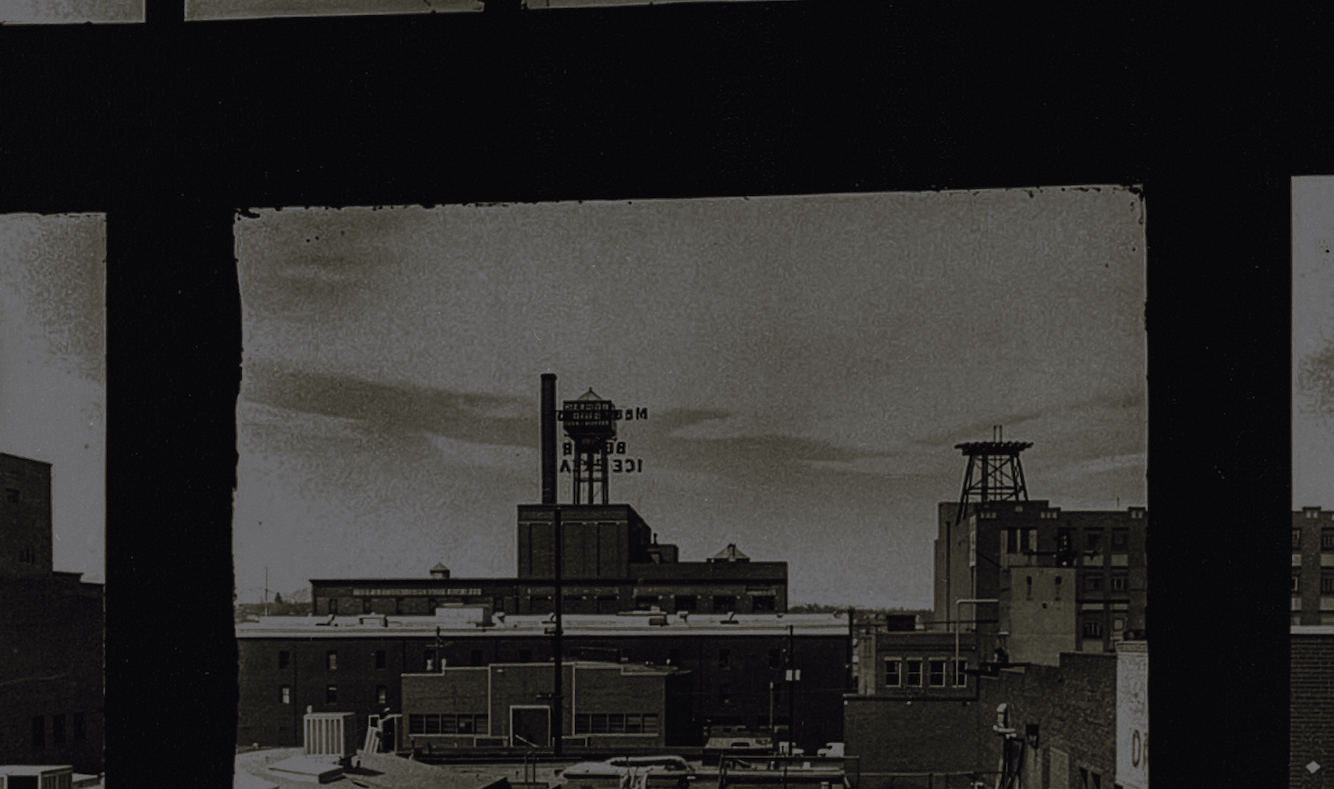

Before artists moved into SoHo, the neighborhood was known as “hell’s hundred acres,” says photographer David Lawrence. “It was full of warehouses and flop houses and bordellos. And no one wanted to come here at night.”
This was back in the 1950s and ’60s, after manufacturers abandoned New York City and left behind a graveyard of empty industrial buildings. “People were fleeing,” David explains, “like, This is a hellhole. Let’s get out of here.”
The original plan for SoHo was grim: City planner Robert Moses wanted to build a ten-lane superstructure highway straight through the neighborhood. “Cities are created by and for traffic,” Moses insisted. If he had his way, SoHo would have been flattened to nothing so people could drive over it on their way from Long Island to New Jersey.
This first generation of artists transformed SoHo.
But protestors—led by Jane Jacobs, author of The Death and Life of Great American Cities—rose up in opposition. The mayor reversed his support in 1969. The City developed an alternative plan: In 1971, city planners passed a zoning ordinance allowing artists to live in SoHo industrial lofts and use them for joint living-work spaces. Six months later, New York State amended its laws to relax fire and building codes and legitimize the new zoning use.
There were two catches. First, the artists had to bring the buildings up to code themselves; they’d get no help or handouts from the City. That ended up being fine with the artists who moved in. They helped each other instead, working together to build SoHo from the ground up into a world-renowned neighborhood and arts hub.
The second catch was that only City-certified artists would be allowed to occupy these spaces. And it’s this second catch that is now, fifty-odd years later, causing SoHo artists trouble—forcing them to sue the City, with Pacific Legal Foundation’s help.

Building a Community from Nothing
Margo Margolis, an abstract painter, was one of the early artists to move in.
“When I moved into my building in 1972, the area was desolate,” she says. Her building was no better: “There was no plumbing or electricity. All that had to be installed.” The artists did it themselves. Some of them bartered art with local stores for appliances.
Margo’s building was cavernous: The floors were each 8,000 square feet. “We had to build the walls to divide the spaces,” she says. Each floor was split into three lofts. The artists then had to build interior walls within their spaces—creating bathrooms, kitchens, bedrooms, and studios out of thin air. They pooled resources and helped each other.
Of course, there was no intercom system in the building. “When people visited, we threw keys out the window in a sock!” Margo says. The City didn’t collect trash; artists hauled it themselves.
Ronnie Wolf is a glass artist. When she moved into her first SoHo loft, “it was basically a square,” she says. “I built a platform, so my bed was above, and underneath was all the storage of everything in my life. And then all around it was open space.”
David, the photographer, didn’t move to SoHo until the early 1980s. He bought his current loft from another photographer who’d found the building in much the same condition as Margo’s. “As I understand, it was totally raw,” David says, “with a slop sink and a toilet, and that was it. There were no walls, nothing. It was just wide open, and they kind of put it together.”
This first generation of artists transformed SoHo. It was urban renewal of a new and altogether-different kind, achieved not through government takings and large-scale public projects but from the opposite—government stepping back, loosening restrictions, and allowing a community to build itself. It was a form of renewal “that cost the City nothing,” Margo points out. “The neighborhood went from a derelict, isolated area into what it is now.” It gave the whole city a new spark of life.
“SoHo made excitement happen,” David says. “People were like, ‘Oh, there’s this new place where there’s artists.’” By 1974, New York Magazine was calling SoHo “the most exciting place to live in the city.”
A Broken Turnstile
David, Margo, and Ronnie are certified as artists by New York City’s Department of Cultural Affairs. That’s what allowed them to move into SoHo’s joint living-working quarters for artists—the specially zoned units.
Ronnie says she had no trouble getting certified when she moved to SoHo because her glass sculptures were already in museums and galleries. “But I know other glass artists who had a very difficult time,” she says. The City told some artists, You can’t be certified because you’ve not shown enough. A government department was now deciding who counted as an artist and who didn’t.
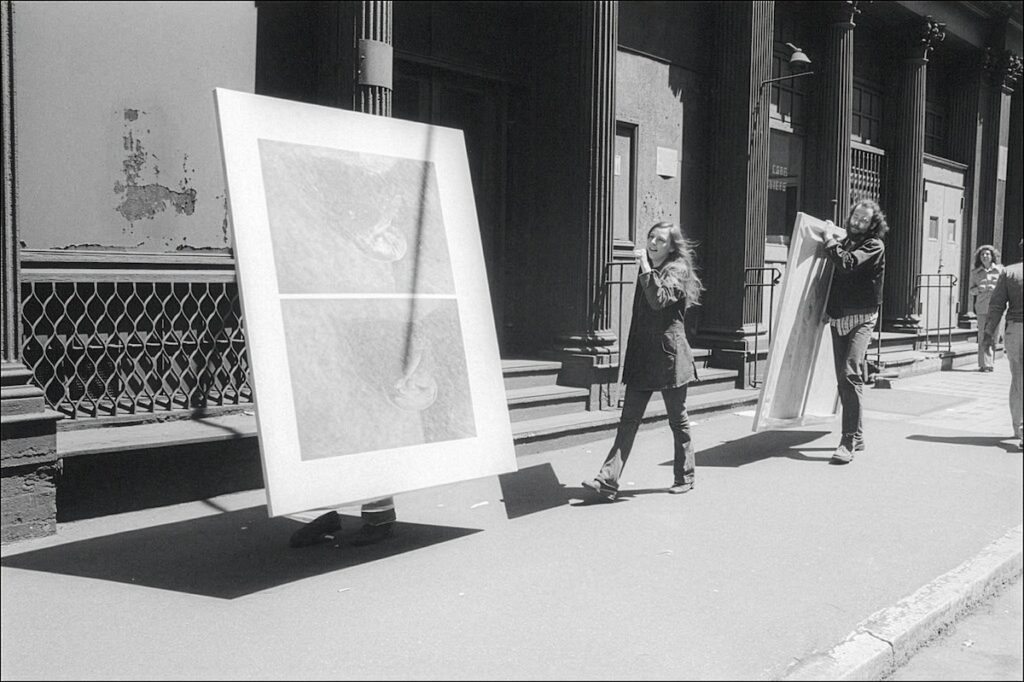
But at least artists could be certified back then. Today, Margo says, “It’s a defunct department. No one answers the phone. You can’t get through to them.” Legally, the requirement still exists: You must be a City-certified artist to own certain SoHo lofts. But in a typical government farce, the City created a mandate and then abandoned the work of fulfillment—setting up, essentially, a broken turnstile: no one in or out. The current owners can’t legally sell their lofts because there are no certified artists to sell to.
In 2021, the City seemed to recognize the mess it had created. But it chose a perplexing remedy. The City rezoned SoHo to allow normal residential use—however, current residents living in joint living-work spaces would have to pay $100 per square foot into a city Arts Fund to convert their lofts to residential zoning.
With the average loft around 2,500 square feet, that’s a $250,000 fee that artists will be forced to donate for the privilege of treating their properties as normal residences that can be sold to anyone, artist certificate or no. The Arts Fund will go to support culture-related public projects in Lower Manhattan.
If the artists don’t pay the exorbitant fee to convert, they’re virtually barred from selling their properties. They can pass the lofts on to their children when they die, but they’ll be leaving their children in the same legal bind they now find themselves in. And any non-artists living in the lofts—people who moved in when the City virtually stopped certifying artists and enforcing the requirement—don’t even have succession rights.
The City set up the joint living-work quarters zoning in SoHo, David points out, and “now they’re trying to withdraw it in a very punitive way.” The artists who made the neighborhood what it is—some of whom, now older, would like to sell and move—are being trapped and punished for their good work.
The Lawsuit
Pacific Legal Foundation represents the Coalition for Fairness in SoHo & NoHo, a nonprofit community organization, in a lawsuit against New York City.
We argue the Arts Fund conversion fee is unconstitutional: You can’t force residents to fund unrelated public arts projects as a condition for approving a zoning change. Our brief cites our U.S. Supreme Court victory in Sheetz v. El Dorado County, in which we represented California homeowner George Sheetz against a $23,000 traffic impact fee. The SoHo artists are being asked to pay ten times as much.
David, Ronnie, Margo, and forty other artists have filed an amicus brief supporting our case. Just as they did decades ago when they built their lofts, the artists of SoHo are coming together to help each other. Their voluntary self-organization is in stark contrast with the City’s heavy-handed extortion attempt to pay for public arts projects—as if forced donations and city bureaucracy could ever create the kind of value for the city that the artists of Soho did on their own, when the government stepped back and let them.
We argued our case at the New York State Court of Appeals in November. We now await the court’s decision.