
[A] just government… impartially secures to each man whatever is his own.
James Madison
Fill your basement with gravel.
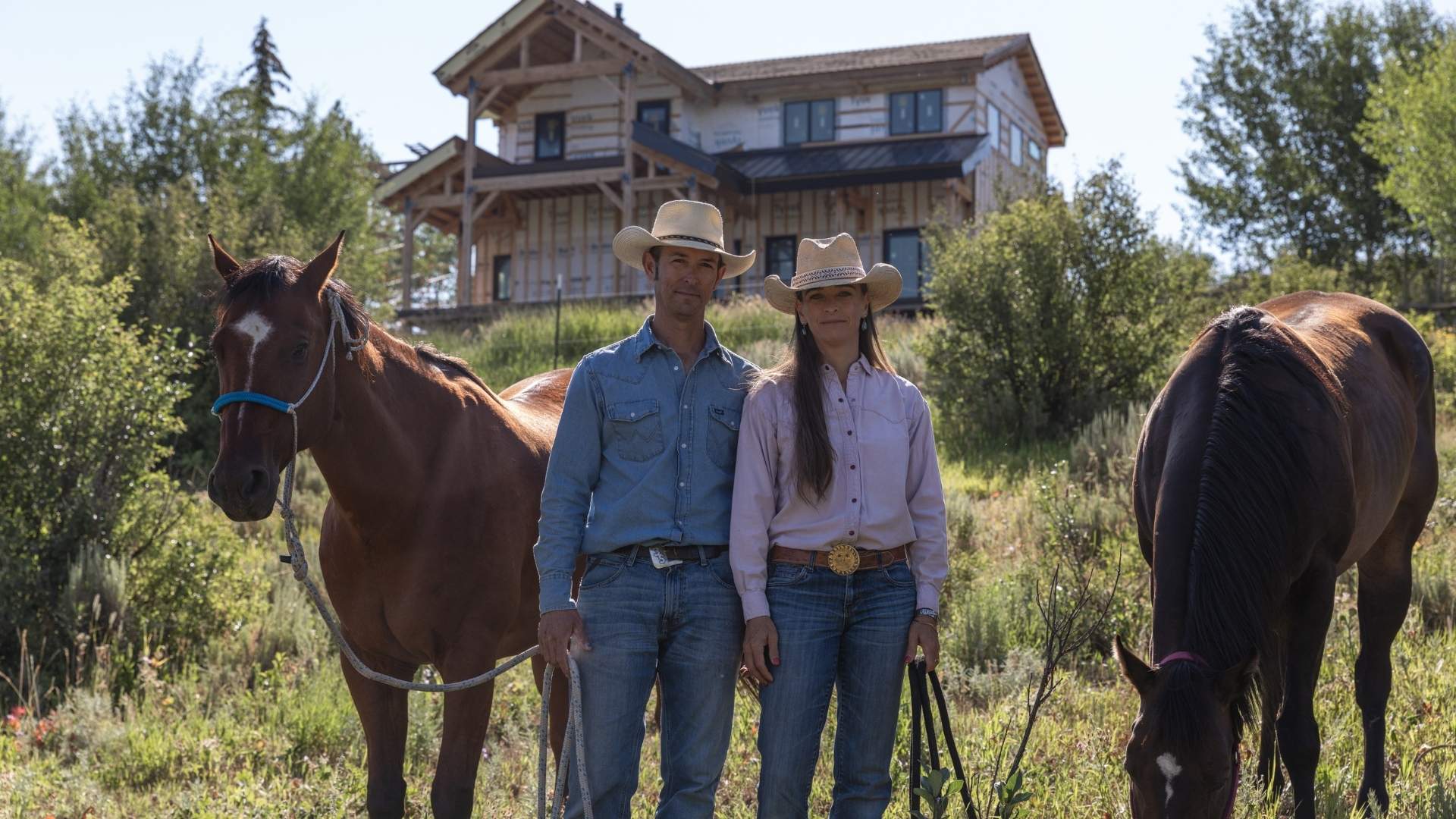
That’s what a County official told Trey and Shelby Scharp to do with their cabin, which sits on five acres along Horse Creek Road in Teton County, Wyoming. The cabin is small, less than a thousand square feet on the main floor, but with a basement that’s just as big. That was a problem for the government.
Wyoming needs houses and isn’t building them fast enough. New construction is adding only about half the units the state needs to meet demand by 2030. Trey and Shelby wanted to build a new house on their property and turn the existing cabin into a rental property.
This is simple math. The state needs housing; a couple wants to build housing. It’s supply meeting demand through the magic of spontaneous order, when individuals acting in pursuit of their own happiness produce what the community needs—the boon of freedom that Adam Smith, writing in 1776, described as man being “led by an Invisible Hand to promote an end which was no part of his intention.”
But that’s not how Teton County saw it.
A Dream House
“The County just doesn’t want you to build a house,” Trey Scharp says. “They don’t want you to do anything.”
The Scharps run a dude ranch in Jackson Hole. Dude ranches date back to the 1800s, when “dude” meant (basically) “citified dandy.” As the American West opened up, wealthy East Coasters came to see what the rugged land offered. They stayed at dude ranches—real, operational ranches that hosted tourists and gave them a taste of cowboy life. Today, at the Scharps’ 140-acre dude ranch, a family might rent out the whole place for a family reunion and spend their days fly fishing, hiking, and horseback riding. When Shelby and Trey spoke to Pacific Legal Foundation one day last year, Shelby was getting ready to go horseback riding “with three nice people from Connecticut.”
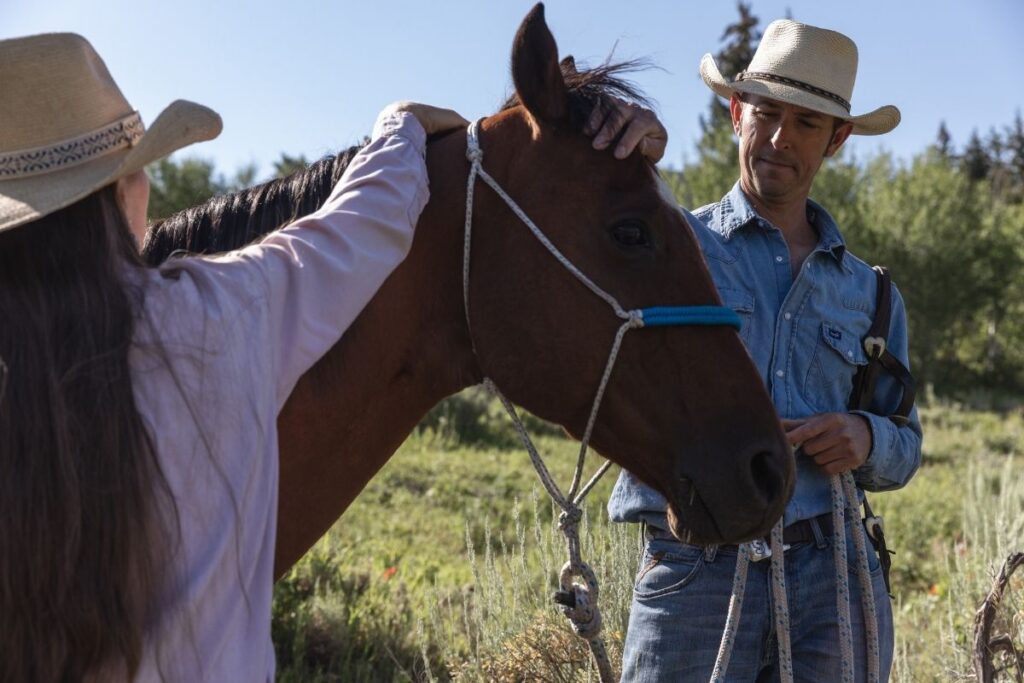
The Scharps have built their lives here. Building a new house has been harder. When they started the permitting process with the County, Shelby recalled, “Trey got handed 600 pages of County ordinances.”
The Scharps chose this five-acre stretch for their new home because it seemed to promise freedom. In their old neighborhood, where Trey grew up, the HOA began complaining about the Scharps’ horse trailer. “So we started to look for a new piece of property where we could have our horses,” Trey said. The property on Horse Creek Road seemed perfect for what Trey and Shelby imagined: a new three-story house for themselves and their teenage daughter, surrounded by quiet acres, with a cabin to rent out.
“This home is something that Shelby and I drew on graph paper when we were probably 22 years old,” Trey said. “We were like, man, wouldn’t a house like this be cool? So here we are trying to fulfill our dream.”
What Went Wrong
The first problem was the size of the existing cabin: Too big for the County. The Scharps weren’t willing to fill the basement with gravel. Instead, they registered the cabin as historically significant, which exempted it.
The next problem was the Scharps’ building plan. The County didn’t like the Scharps’ plan to build a second kitchen and exterior door in their new home’s basement so that it too could be used as rental housing someday. That violated the zoning district’s ban on multi-family dwellings, Teton County planning officials informed the Scharps.
But the biggest hit came when Trey and Shelby applied for a building permit. The County said it would approve a permit only if the Scharps paid a $25,000 “affordable workforce housing fee.”
It was suddenly clear why Wyoming has a housing shortage. In Teton County, at least, the government was making it near impossible to build.
Property Rights in Colonial America
In colonial America, the freedom to build was like the freedom to breathe. It was assumed: If you had land, you could build on it.
When there were brief housing shortages in 17th- and 18th-century America, it was supply that was the impediment, not government. Settlers in the 1640s were surrounded by forests and stone, yet they had no sawmills or mortar. In Pennsylvania, New York, and Massachusetts, pioneers who couldn’t build houses dug cave-homes instead. An 1898 book on colonial history later described the building process:
[The homes] generally were formed by digging into the ground about four feet in depth on the banks or low cliffs near the river front. The walls were then built up of sods or earth laid on poles or brush; thus half only of the chamber was really underground. If dug into a side hill, the earth formed at least two walls. The roofs were layers of tree limbs covered over with sod, or bark, or rushes and bark. The chimneys were laid of cobblestone or sticks of wood mortared with clay and grass. The settlers were thankful even for these poor shelters, and declared that they found them comfortable.
Americans have always been builders, no matter what it took. By 1776, no one was living in caves anymore.
Adam Smith published The Wealth of Nations four months before the Declaration of Independence. “[T]hough North America is not yet so rich as England, it is much more thriving,” Smith reported in the book, “and advancing with much greater rapidity to the further acquisition of riches… Plenty of good land, and liberty to manage their own affairs their own way, seem to be the two great causes of the prosperity.”
What would Smith think, 250 years later, of an America that has turned the process of developing land into death by a thousand cuts?
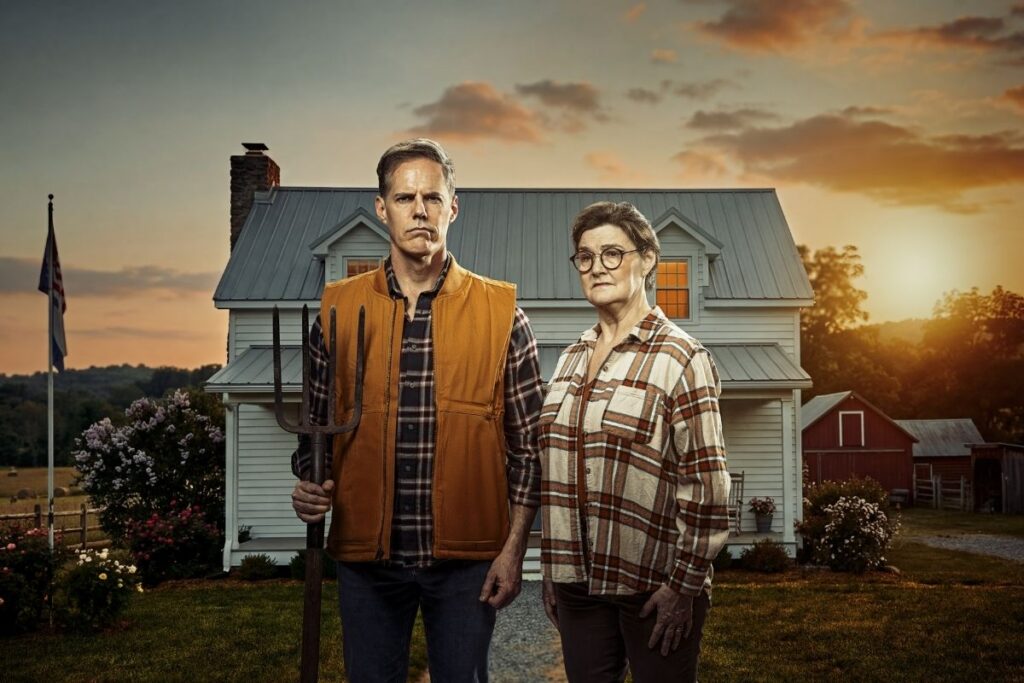
The Lawsuit
Most of Teton County is owned by the government: Over 97 percent is public land. The people who live here only have 3 percent to build on. It’s like living on an island, Shelby says. “There will never be more land.”
The County wants new homebuilders to subsidize affordable housing because (the argument goes) more homes mean more people shopping locally, and that means new jobs, and where will those new workers live?
Leaving aside the fact that Trey isn’t a new resident—he’s lived here all his life, and at one point he and Shelby were on the affordable housing list themselves (but weren’t picked)—the County’s math is bad. The Scharps were offering to add rental units to the community because it would benefit them. The County wanted them to pay a fee so it could centrally control and distribute affordable housing. Which would help the people of Teton County more: the new rental units created voluntarily by the Scharps, or their $25,000 forced donation?
Last May, Pacific Legal Foundation helped Shelby and Trey file a federal lawsuit against the County.
“This is a lawsuit about the principle of property owners having the right to do what they would like with their property,” Trey said.
A New Era
Something remarkable happened at the dude ranch in December.
Trey and Shelby have managed the ranch for over 20 years. But they didn’t own it. A retired couple, Joe Albright and Marcia Kunstel, owned the 103-year-old spread and hired the Scharps to manage it.
That changed in December. Albright and Kunstel gifted the ranch to the Scharps.
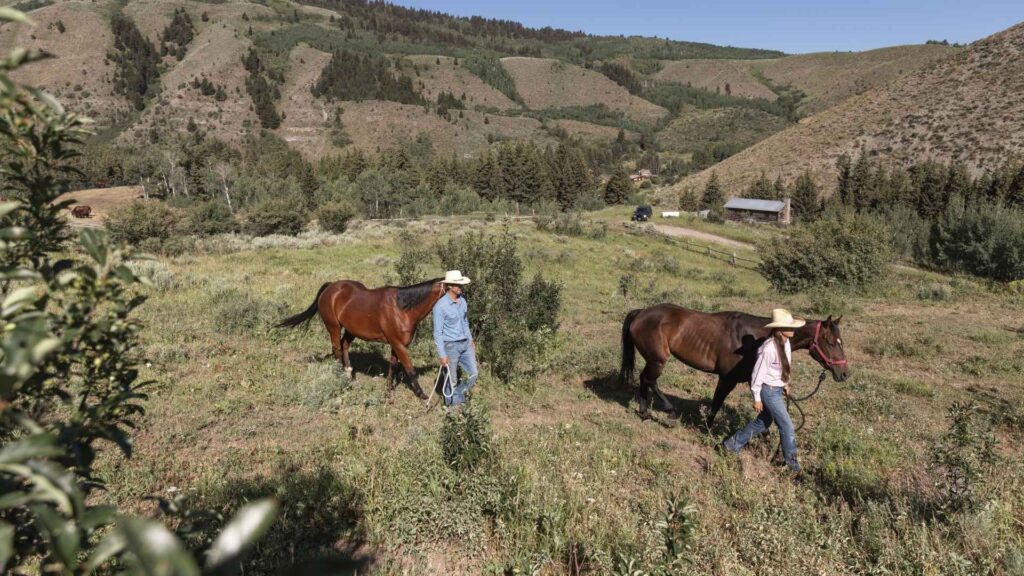
The Scharps “have dedicated themselves to protecting the Ranch and know it better than anyone,” an announcement on the ranch’s website explains. “We’re truly excited for what the future holds under their thoughtful guidance.”
The historic ranch will continue—not by the grace of top-down government action but through the unencumbered decision-making of free people, knowing best what to do with the land they own.
A ‘Mistake’
In March, the Scharps got a letter from the County.
“Teton County made a mistake,” the letter began.
We required you to pay an affordable housing mitigation fee that you did not need to pay. We are sorry… [and] regret every minute of distress this litigation caused you.
The County agreed to refund the Scharps’ fee, plus interest. The County Commission chair told a local news station that officials would review all similar fees issued over the past four years. “I think it’s always a good idea to do that when you are asking private citizens to come up with a fee to address an impact on the community,” he said.
The Scharps won. They will run their ranch while living in their newly constructed home, built next to the cabin—the place they’ve worked for all these years.
PLF continues to look for other property owners facing similar fees, to keep the fight going.