
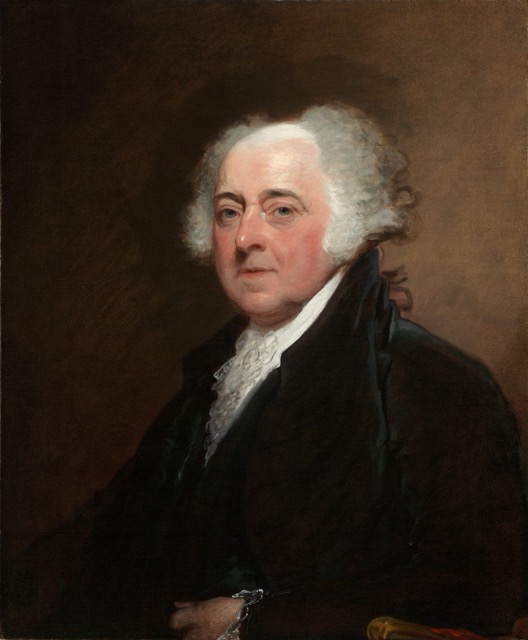
[T]he happiness of the individual is the end of man.
John Adams
Editor’s note: C. Bradley Thompson is the executive director of the Snow Institute for the Study of Capitalism at Clemson University and one of the nation’s leading scholars on the American Founding. In April, Professor Thompson presented a paper at a conference hosted by Pacific Legal Foundation and the Civitas Institute on “Liberty, Law, and the Pursuit of Happiness.” The following is excerpted from Professor Thompson’s paper.
Not only is the American Revolution the most important event in American history, but it may very well be the greatest event of the modern world. The Revolution changed everything. It was a world-shattering revolution that broke in half the greatest empire since the fall of Rome, and it founded a new empire not of power but of liberty. The revolution set in motion political and cultural forces that eventually destroyed the Old World’s ancien régime, and it unleashed a worldwide movement to break the remaining chains of feudalism and despotism. The American Revolution destroyed the idea of hereditary power and artificial aristocracy, and it destroyed the idea that some men were born to rule and others to serve. Most importantly, the American Revolution created new spheres of freedom previously unknown to men, and it launched a great moral revolution that made the pursuit of happiness available to all men and women.
The Right to the Pursuit of Happiness
The Founders’ theory of rights said that man, given his nature, has a right to the pursuit of happiness, which is the culminating or architectonic natural right. The origin and meaning of this phrase and Jefferson’s reasons for including it in the Declaration of Independence have confounded scholars for over two centuries. The right to the pursuit of happiness is the most difficult of the fundamental natural rights to understand because the revolutionary generation said very little about it. Only a few of the major pamphlets of the era even mentioned happiness in passing. Jefferson gave no serious account of what he meant by happiness, or from whence he might have derived the idea of a right to the “pursuit of happiness.”1
Despite the relative paucity of writings on the meaning of happiness in the revolutionary literature, Americans took the subject seriously. Some described happiness as the highest end of government, and most described it as the purpose of life. In Common Sense, Thomas Paine quoted an obscure Italian writer, Giacinto Dragonetti (“that wise observer on governments,” Paine called him), who, in a 1766 essay on “Virtues and Reward,” told his readers,
The science of the Politician consists in fixing the true point of happiness and freedom. Those men would deserve the gratitude of ages, who should discover a mode of government that contained the greatest sum of individual happiness, with the least national expense.
In his influential 1776 pamphlet Thoughts on Government, published a few months after Paine’s Common Sense and several months before Jefferson sat down to write the Declaration, John Adams equated “the divine science of politicks” with the “science of social happiness.” Indeed, “the happiness of society is the end of government,” he continued, and the “happiness of the individual is the end of man.”
Decades later, Thomas Jefferson told the Polish American general Thaddeus Kosciuszko that a group of young men (presumably students at Mr. Jefferson’s university in Charlottesville) had moved into the village next to Monticello in order to study with the author of the Declaration.
“In advising the course of their reading,” Jefferson wrote to his friend, “I endeavor to keep their attention fixed on the main objects of all science, the freedom and happiness of man.” Freedom and happiness were, after all, “the sole objects of government,” he told Kosciuszko.2
It is not known what Jefferson had these young men read, nor what they talked about, but the letter does indicate that Jefferson thought happiness to be a serious subject of scholarly investigation. In fact, readers will note that Paine, Adams, and Jefferson all suggested that there was a “science” of happiness, which was connected to both the science of government and the science of freedom.
What Is ‘True’ Happiness?
The meaning that Jefferson and the revolutionary generation attributed to the “right to the pursuit of happiness” can be teased out through a series of questions concerning the nature and meaning of happiness, pursuit, and right. The answers to these questions are elusive and must be reconstructed from fragmentary evidence. The phrase “pursuit of happiness” is not listed as a natural right in any of the petitions, resolves, declarations, or major pamphlets published by the Americans in the years between 1764 and 1776. It does not appear in the list of English rights and liberties enumerated by either the Stamp Act Congress in 1765 or the declaration of the First Continental Congress in 1774. Even discussions on the nature and meaning of happiness are rarely raised in the revolutionary literature.3
The closest that any formal public document comes to Jefferson’s formulation is wording contained in section 1 of George Mason’s Virginia Declaration of Rights, published just weeks before Jefferson completed the Declaration of Independence. Jefferson was almost certainly familiar with Mason’s document when he sat down to write on behalf of the Continental Congress. According to Mason and the Virginia Declaration, “all men are by nature equally free and independent and have certain inherent rights, of which, when they enter into a state of society, they cannot, by any compact, deprive or divest their posterity; namely, the enjoyment of life and liberty, with the means of acquiring and possessing property, and pursuing and obtaining happiness and safety.”4 Mason’s wording is close to Jefferson’s, and the comparative meaning is virtually identical. It is possible—indeed, it seems likely—that Jefferson simply compressed Mason’s language for stylistic reasons. Still, the phrase “pursuit of happiness” seems to be uniquely Jefferson’s—at least in an American context.
On a deeper, philosophical level, it seems clear that Jefferson borrowed the phrase from John Locke’s 1690 An Essay Concerning Human Understanding, where the Englishman used it repeatedly. Locke’s discussion of happiness and its pursuit is too long and complex to be considered here, but his central point is worth considering:
As therefore the highest perfection of intellectual nature lies in a careful and constant pursuit of true and solid happiness, so the care of ourselves, that we mistake not imaginary for real happiness, is the necessary foundation of our liberty. The stronger ties we have to an unalterable pursuit of happiness in general, which is our greatest good, and which, as such, our desires always follow, the more are we free from any necessary determination of our will to any particular action . . .5
There is much in this complex paragraph worth unpacking in order to understand what Locke meant by the “pursuit of happiness.” The Englishman begins with an empirically observable truth-claim: All men everywhere pursue “true” happiness, but not all men attain it. Some are led astray by the siren song of “imaginary” happiness, and some simply fail for a variety of reasons in their pursuit of “real” happiness. Also, with true and imaginary happiness, there are “infinite degrees of happiness.”6 Most men pursue some form or degree of happiness every day, but even the happiest of men experience its antipode, misery, or some degree of it, throughout their lives. Happiness, for Locke, is the end result of men pursuing their self-interest, rightly understood, which in turn is the foundation of liberty.
How precisely does the “pursuit” of happiness work for Locke? It begins with the mind, with reason’s “power to suspend the execution and satisfaction of any of its desires.” Man’s reason, Locke says, “is at liberty to consider the objects” of its desires, to “examine them on all sides, and weigh them with others.” With this liberty to think, which, in part, means the ability to pause and suspend our desires, men have “the opportunity to examine, view, and judge of the good or evil of what [they] are going to do” in the pursuit of their happiness.7 This means that man must first choose to rate and judge certain values, and then he must choose among the available objects of his desires.
The right to the pursuit of happiness is corollary to the right to liberty.
Because men experience pleasure in different ways, the objects of happiness and the means of pursuing them differ from one man to another. Some choose “study and knowledge,” others “hawking and hunting” or “luxury and debauchery”; still others prefer “sobriety and riches,” while some find happiness in “virtue” or “contemplation” or “glory” or “honour” or “immortality.” Still, identifying things that make men happy does not necessarily result in happiness. In some cases, men realize that certain values do not give them happiness, and in other cases they fail to achieve their values and thus their happiness. Because man is neither omniscient nor infallible, there results “all that variety of mistakes, errors, and faults which we run into in the conduct of our lives and our endeavours after happiness.”8 The great challenge for men as they pursue their true happiness is in overcoming their passions, which resist and fight against their right reasoning. They must use their reason to choose the object of their happiness and the path to pursue it. The pursuit of happiness is a process, which, if not properly conducted, can actually lead to its opposite—namely, misery and suffering.
Thus it is important for the “care of ourselves,” Locke writes, that men not mistake “imaginary for real happiness.” There is nothing innate about the pursuit of happiness precisely because of the complexity of man’s daily life; a man makes myriad choices that incline toward either “imaginary” or “real” happiness.9 For Locke, the distinction between real and imaginary happiness is the distinction between acting in one’s long-term self-interest versus acting in the pursuit of short-term pleasures that can have unintended, long-term negative consequences. True happiness—the highest form of self-interest, rightly understood—is both euphoric and long lasting. It is the result of good choices and right action—that is rational evaluation and judgment, and virtuous behavior. Imaginary happiness provides short-term pleasure but oftentimes long-term misery. Imaginary happiness results from irrational or faulty reasoning, and it leads ultimately to its antipode: misery or suffering.
Locke does not directly identify the virtues necessary to achieve happiness, but he certainly implies that they include rationality (including wisdom and prudence), temperance, fortitude, productiveness, and a host of other virtues. As such, the pursuit of happiness, rather than serving as the basis of hedonism, is the foundation of moral action and therewith of civilization.
The Declaration’s Capstone Right
The Declaration of Independence lists the “pursuit of happiness” as an “unalienable right.” It does not say that man has a right to happiness, nor does it say that government should define what happiness is. The Declaration says only that individuals have a right to pursue it, which means that individuals should be left free to pursue it.
But how and why is the pursuit of happiness a right? The right to the pursuit of happiness is corollary to the right to liberty. Liberty is a precondition for the pursuit. The freedom to pursue happiness must be recognized as a right, which means identifying and establishing the sociopolitical conditions necessary for all individuals to pursue their own happiness. This is why Jefferson, Adams, and Paine all spoke of happiness in the context of the science of politics and the science of freedom.
But what is the relationship between the individual’s pursuit of happiness and the role of government in society? The signers of the Declaration of Independence did not think that the coercive force of government should be used to define, dictate, maximize, satisfy, or guarantee individual happiness. Jefferson was unable “to conceive how any rational being could propose happiness to himself from the exercise of power over others.” In 1771, a Massachusetts author calling himself “Scipio” summed up what Americans meant by a right to the pursuit of happiness when he wrote: “That every rational man is the best guardian of his own interest, is so obvious a truth, that one would deem it an affront to the public understanding to suggest it needed so much as a repetition.”10
The right to pursue happiness is therefore best fulfilled in a certain kind of society with a certain kind of government. What kind or form of government did the revolutionary generation think best promoted the rights of individuals to pursue their happiness? For Jefferson and his fellow Americans, happiness is most easily pursued and attained in a society in which the government’s role was limited simply to providing a moral-legal framework in which individuals could be left alone to seek their own happiness as they saw fit—as long as said individuals do not violate the freedom of other individuals to pursue their own happiness. Beyond that government should not go.
“Misgovernment,” Jefferson lamented late in life, diverts men from using their “energies” for achieving the proper object of life—that is, “the happiness of man”—and from establishing a “paradise of the whole earth.” This is why he was sometimes tempted to suggest “those societies [e.g., of American Indians] which live without government, enjoy in their general mass an infinitely greater degree of happiness than those who live under the European governments.” The golden mean between the political anarchism of Native American societies (with all of their vices) and political absolutism of European societies (with all of their vices) was embodied by America’s limited constitutional republics, which are “more friendly,” Jefferson argued, “to the happiness of the people at large, and especially of a people so capable of self-government as ours” than any other form of government. A government defined by a “noiseless course, not meddling with the affairs of others, unattractive of notice” was the best “mark that society is going on in happiness.” It was therefore necessary for American statesmen to “prevent the government from wasting the labors of the people under the pretense of taking care of them” so that the people can “become happy.”11
The “pursuit of happiness” was the Declaration’s capstone right that defines and guides the human experience. To identify, liberate, and protect this right was the great moral achievement of the American Revolution. Jefferson and his fellow revolutionaries understood that the pursuit of happiness provides no guarantees, but they also knew that without happiness, man’s life would be intolerable.
The Stamp, Townshend, Tea, and Coercive Acts violated the colonists’ rights to liberty and property, but in the end these laws also violated the Americans’ right to the pursuit of happiness. American revolutionaries knew that a free society—one that guarantees to each person the freedom and the right to pursue happiness as he defines and seeks it—greatly enhances the possibility of each person’s successfully ascending to a life full of happiness and joy.

- General analyses of the historical meaning of happiness include: Howard Mumford Jones, The Pursuit of Happiness (Cambridge, MA: Harvard University Press, 1953; repr., Ithaca, NY: Cornell University Press, 1966); Ursula M. von Eckardt, The Pursuit of Happiness in the Democratic Creed: An Analysis of Political Ethics (New York: Praeger, 1959); and Darrin M. McMahon, Happiness: A History (New York: Grove Press, 2006). On the intellectual sources of the phrase “pursuit of happiness” in the Declaration, see McDonald, Novus Ordo Seclorum, ix–x. ↩︎
- Paine, “Common Sense,” in The Life and Works of Thomas Paine, ed. William M. Van der Weyde (New Rochelle, NY: Thomas Paine National Historical Association, 1925), 2:147; Adams, “Thoughts on Government,” in The Revolutionary Writings of John Adams, ed. C. Bradley Thompson (Indianapolis, IN: Liberty Fund, 2000), 287; Jefferson to General Thaddeus Kosciuszko, February 26, 1810, in The Writings of Thomas Jefferson, ed. Andrew A. Lipscomb and Albert Ellery Bergh (Washington, DC: Thomas Jefferson Memorial Association, 1903), 12:369–70. ↩︎
- The one notable exception to this trend is a series of articles published in 1773–1774 in the Virginia Gazette (ed. Alexander Purdie and John Dixon). See, e.g., from that newspaper: “On the Motives to Virtue From Personal Happiness,” January 28, 1773; “The Pursuit After Happiness,” November 18, 1773; “The Character of a Happy Life,” December 3, 1773; “Happiness,” January 20, 1774; and “Essay on Happiness,” February 10, 1774. These essays are available in digital form in the collection of Early American Newspapers (a website maintained by Readex, a division of NewsBank, Inc.). Unfortunately, however, the quality of these electronic versions is poor. ↩︎
- George Mason, Virginia Bill of Rights, in Colonies to Nation, 1763–1789, ed. Jack P. Greene (New York, NY: W. W. Norton & Co., 1975), 333. ↩︎
- Locke, An Essay Concerning Human Understanding, ed. John W. Yolton (London: Dent, 1961), bk. II, chap. xxi, para. 51. (Emphasis added.) Hereafter cited as ECHU followed by book, chapter, and paragraph numbers. ↩︎
- Locke, ECHU, II.xxi.43–44. ↩︎
- Locke, ECHU, II.xxi.47. ↩︎
- Locke, ECHU, II.xxi.54–55, 60, 47. ↩︎
- Locke, ECHU, II.xxi.51. ↩︎
- Jefferson to Destutt de Tracy, January 26, 1811, The Writings of Jefferson, 13:18; Scipio [pseud.], Massachusetts Spy, April 25, 1771. ↩︎
- Jefferson to Ellen W. Coolidge, August 27, 1825, The Writings of Jefferson, 18:341; Jefferson to David Howell, December 15, 1810, The Writings of Thomas Jefferson, 12:436; Jefferson to Thomas Cooper, November 19, 1802, The Writings of Thomas Jefferson, 10:342. ↩︎