

A wise and frugal government, which shall restrain men from injuring one another, shall leave them otherwise free to regulate their own pursuits of industry and improvement…
Thomas Jefferson
New Orleans is bursting with energy. Everything feels alive—from the Spanish moss dripping from Southern oak trees to the pastel facades with their decadent wrought-iron balconies.
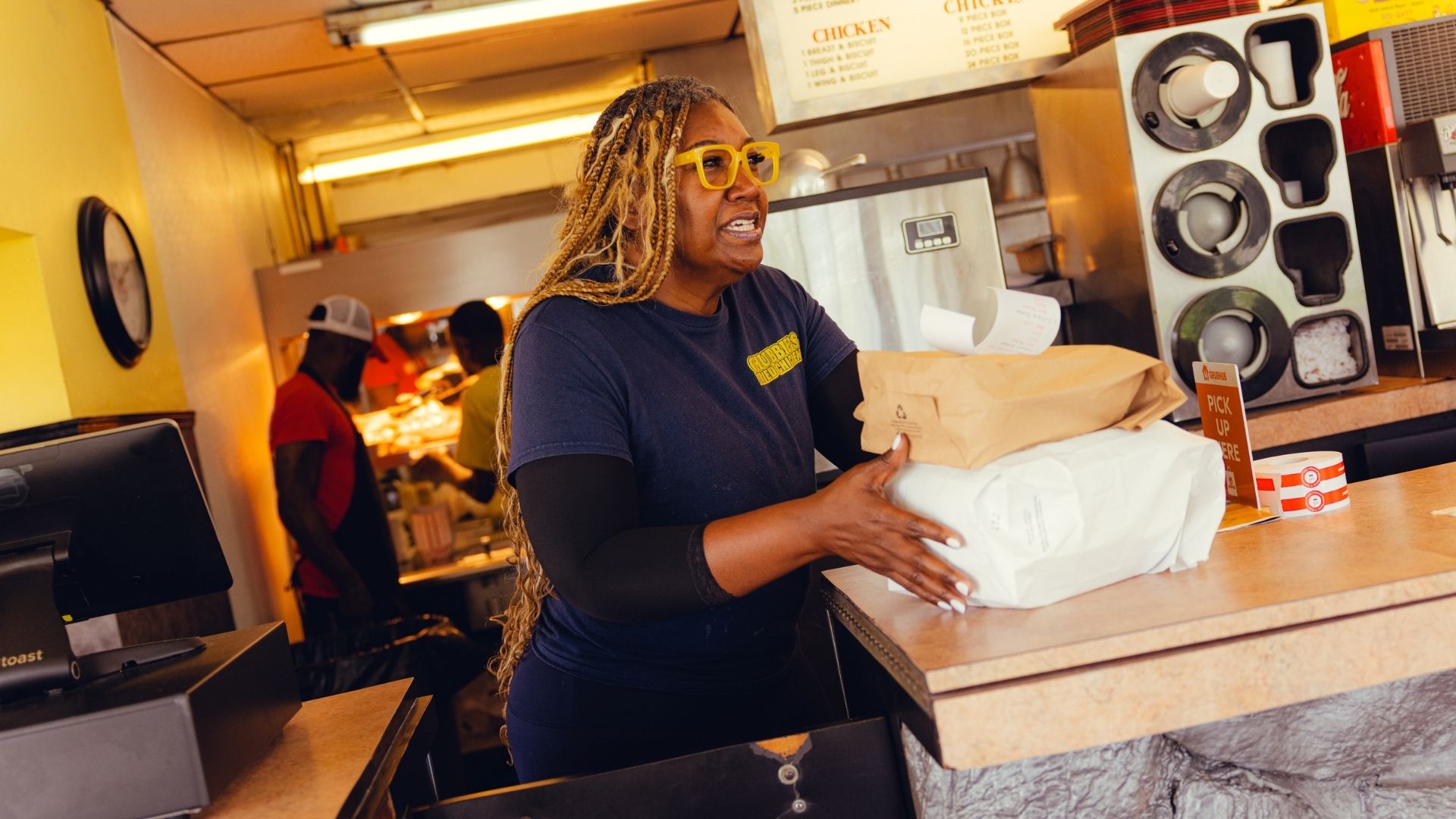
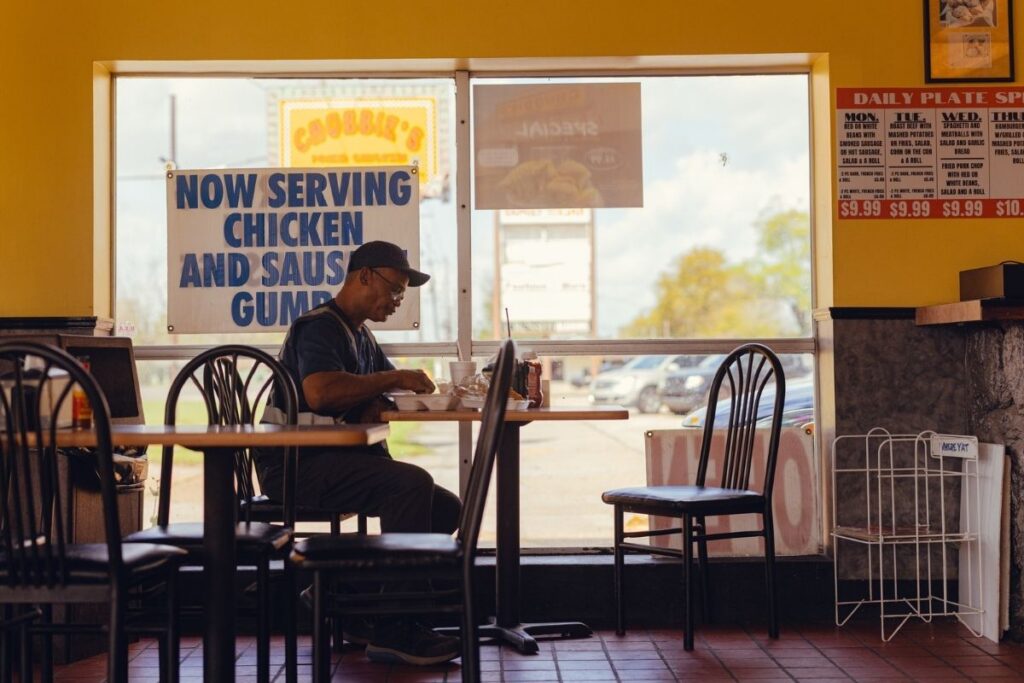
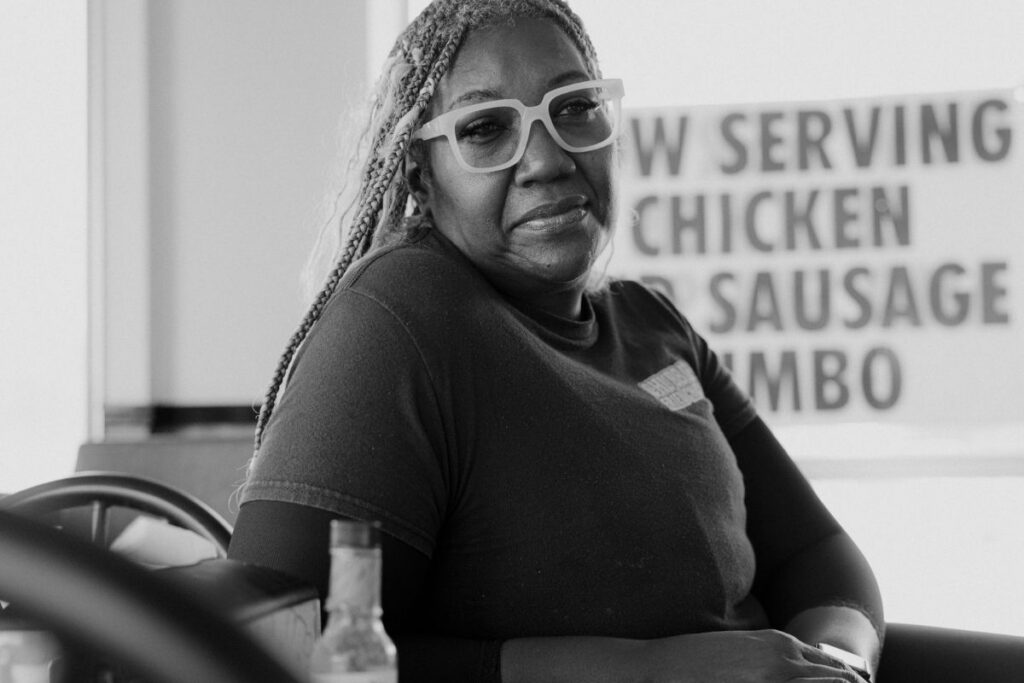
In a sunny diner in the city’s 15th Ward, Ursula Newell-Davis serves her customers fried chicken with a smile. Her restaurant, Chubbie’s, is a 40-year-old neighborhood institution. She bought it a few years ago and is carrying on its traditions: plates of fried chicken, gumbo, and po’ boys.
“We get a lot of local businesspeople and even politicians in here,” she told a local magazine. “The love that the community has given me has been so exciting.”
You’d never know, watching Ursula keep busy in her restaurant, that the veteran social worker once had a different business dream. For years, Ursula tried to start Sivad Home and Community Services—a way to provide respite care for working parents with special needs children. For these families, time is a daily constraint. Parents must work long, irregular hours to put food on the table, leaving little time at home and too much time for their children to be unsupervised. During those hours, Ursula saw children struggle with essential tasks like homework, preparing a meal, and even basic hygiene. She also saw what can happen when kids have nowhere to go after school and fall in with the wrong crowd.
Ursula was a social worker for 25 years. She knew she could provide a service to help these families. But Sivad never opened: It was trapped in Louisiana’s byzantine “Facility Need Review” system.
Louisiana law requires providers like Ursula to apply for a Facility Need Review (FNR), where they must demonstrate that there is a community need for their services. In other words, the Louisiana Department of Health effectively runs a monopoly over respite care, barring new businesses from starting.
Ursula did everything the process asked of her. But the FNR Committee denied her application, insisting that the community has no need for Sivad—even though half of Louisiana’s families in need of respite care are unable to find it. The State Health Department’s own study found that 36 percent of care providers could not be reached by phone, and of the ones that did answer, 44 percent weren’t accepting clients from the population Ursula wanted to serve.
With one swift decision, the government denied New Orleans families of essential care and prevented Ursula from earning a living with her business.
“I don’t think the state has the right to determine my success or failure,” Ursula points out. “Let me try.”
It’s a simple request, but one with deep roots. Long before Ursula’s fight, American colonists were grappling with the same question: Who gets to decide whether a person can earn a living?
The answer helped spark a revolution.
The Freedom to Try
The colonial economies were built on the freedom to try one’s hand in the marketplace.
Would-be entrepreneurs were intoxicated by the prospect of controlling their own economic destinies. Success was not guaranteed, but if they failed, at least it would be by their own hand.
With skin in the game, they were more willing to take risks. And for the merchants who traded by sea, risks were baked into the job description.
Importing goods by ship was not for the faint of heart or wallet. Inclement weather and navigation errors meant constant delays or, worse, shipwrecks. Disease and unsanitary conditions threatened the life and well-being of everyone on board. Even if you managed to avoid these calamities, pirates and privateers still threatened to steal your cargo.
For much of the early 18th century, Britain maintained economic restrictions on the colonies, but in practice, largely left them to their own devices. On paper, the Navigation Acts’ trade restrictions created additional hurdles for merchants. But the colonial merchants ignored the laws, and British customs officials were often obliged to look the other way, either because they lacked manpower or because they were more than happy to accept a small bribe. Merchants traded illegally with the Dutch, whose cheap goods kept colonial businesses stocked and created a marketplace where more people could afford to buy, sell, and build a livelihood.
While the colonies thrived, Britain was tied up in expensive foreign entanglements.
By 1763, Britain was strapped with debt from the Seven Years’ War against France. The King looked to his most promising and underutilized source of revenue: the American colonies.
It began with the Sugar Act, which technically cut the existing molasses duty in half. But the King had never enforced the tax before; now he would.
Thus began Britain’s regulatory creep.
Next, the King restricted colonial monetary policy with the Currency Act. The Stamp Act followed, implementing the first direct tax on printed goods, affecting the everyday transactions of every colonist. The Quartering Act then shifted the costs of imperial defense onto local communities. Shortly thereafter, the Declaratory Act gave Parliament authority over the colonies in “all cases whatsoever.”
In other words, Britain wasn’t just cracking down on trade or taxes; it was asserting ultimate control over the colonies, including how people work, trade, and earn a living.
In 1767, the Townshend Acts fueled the fire by enacting duties on imported glass, tea, and paper, expanding customs enforcement, and strengthening vice admiralty courts—juryless tribunals where customs violations were tried by Crown-appointed judges.
The Townshend Acts were a turning point for merchants. Even those willing to risk skirting the law now faced real and immediate consequences.
This was a “damned if you do, damned if you don’t” moment for the merchants. If they continued business as usual, they would become smugglers in the Crown’s eyes and subject themselves to fines, seizures, and vice admiralty courts.
But complying with the law meant paying higher duties while also being forced to trade with more expensive suppliers. To offset the costs, merchants would be forced to increase prices for consumers, forfeiting their competitive edge in the market.
For smaller merchants, neither option was feasible; they couldn’t afford to comply, and they couldn’t afford the risks that came with smuggling. For new competitors, the price and risk barriers were now too high to justify starting a business.
Even the more successful merchants were now just one overzealous customs search away from financial ruin.

The Liberty Affair
Years of salutary neglect had helped make John Hancock one of the most prominent merchants in Boston. In 1768, he became one of the first high-profile casualties of the Townshend Acts.
Hancock’s ship, the Liberty, arrived in Boston Harbor carrying a shipment of Madeira wine. The next day, customs officials seized the ship, accusing Hancock of unloading some of the wine in the middle of the night to avoid paying duties.
While he maintained his innocence, the smuggling allegations brought against Hancock were likely true of many local merchants. But his prominence made him an ideal target, allowing customs officials to send a broader message: Trade laws would be enforced.
The message was received. But the colonists did not respond with submissive compliance.
Riots erupted in Boston as customs officials became targets of harassment and violence. Some even fled the city.
The case was brought before a vice admiralty court, where Hancock was represented by John Adams and James Otis, Jr. The Crown’s shaky evidence combined with the chaotic fallout from the Liberty Affair resulted in the court quietly dropping the charges.
But lasting damage had already been done. Not only had Hancock suffered a great financial loss when his ship was seized, but the Liberty was also never returned to him. Instead, it was repurposed as a customs enforcement vessel—which was later burned in protest by angry colonial merchants after their ships were seized.
Jeopardizing the livelihood of one single entrepreneur was enough to spark protests in the streets of Boston. It was anathema to the Founders—the idea that the government would try to destroy a successful business and crush economic freedom.
250 Years Later
In 1776, the American population was about 2.5 million people. Today there’s almost double that in the state of Louisiana alone. That’s more needs, more dreams, and more entrepreneurs trying to get businesses off the ground.
New Orleans was absorbed into the United States in 1803 with Thomas Jefferson’s Louisiana Purchase. By 1840, it was the wealthiest city in the country—a bustling port. But today the median household income in New Orleans is $56,000—far lower than the national median. It’s now one of the fastest-shrinking cities in the country, with young people leaving for cities with better job opportunities.
Others, like Ursula, stay behind, trying to build businesses their community desperately needs.
Pacific Legal Foundation has represented Ursula since 2021. She filed a federal lawsuit against Louisiana, arguing that she wished to open and operate Sivad but “cannot do so without risking fines and other penalties,” thanks to the state’s FNR law.
“The Due Process of Law Clause of the Fourteenth Amendment to the U.S. Constitution protects the right to earn a living in a chosen profession free from unreasonable government interference,” our complaint argued. Ursula was “fit, willing, and able to provide respite services” but was “prohibited solely because of the FNR process.”
Ursula lost in lower courts. Then, in 2023, PLF asked the Supreme Court to hear the case. The Court clarified in the 2022 Dobbs decision that it considers a right “fundamental” if it is “deeply rooted in this nation’s history” and “essential to our nation’s ‘scheme of ordered liberty.’” The right to earn a living is deeply rooted, PLF emphasized in our petition for Ursula’s case.
“[T]he Founders were concerned about laws that excluded individuals from their desired trade and deprived them of a living,” we noted—and they were especially concerned about government-run monopolies.
The Natural Right to Earn a Living
The year of the Liberty Affair, Benjamin Franklin was living in London, representing colonial interests before the British government.
Sensing what was to come in the wake of the Townshend Acts, the always-diplomatic Franklin tried to explain the origins of colonial unrest to a British audience. In his essay, “Causes of the American Discontents before 1768,” he wrote that “[t]here cannot be a stronger natural right than that of a man’s making the best profit he can of the natural produce of his lands.”
Franklin borrowed heavily from English philosopher John Locke, who wrote that every person has a natural right to property, including the freedom to combine it with their labor and to retain the fruits of that labor. By enacting economic restrictions on the colonies, the Crown was depriving them of their most basic natural rights.
Locke’s natural law theory was influential in Britain, but it did not govern Parliament. Yet Britain’s own legal tradition imposed similar limits, rejecting the Crown’s use of monopolies to shut people out of lawful trades.
Long before the Revolution, the English courts challenged the Crown’s proclivity to grant monopolies, which they defined as any “company insulated from competition by a special legal privilege which barred others from competing.”
Lord Chief Justice of England Edward Coke famously commented that “the common law abhors all monopolies, which prohibit any from working in any lawful trade.” In 1623, Parliament would go so far as to enact the Statute of Monopolies, which outlawed monopolies, except for patentable inventions.
When a government grants itself sweeping control over the conditions of economic activity, it doesn’t just regulate markets; it shapes who can succeed and who is allowed to earn a living at all.
And in the years leading up to the Revolution, this is exactly what Britain began to do. By restricting trade and commerce through the Townshend Acts, the King was tipping the scales in favor of British merchants, claiming the power to decide the winners and losers in the marketplace—authority the English courts already dismissed.
The Revolution likewise rejected that kind of control. But has that principle remained secure? Every year PLF takes on new cases brought by entrepreneurs struggling with red tape: the surfing instructor who can’t teach on beaches, the family winery that can’t host tastings, the dog trainer who can’t charge fees. There’s even a dark flipside to government control of livelihoods: the Benedetti case, where a California county is trying to force a pair of brothers into commercial farming as a condition for building a home. The brothers are not farmers; they’re plumbers. The government doesn’t seem to care.
To this day, the Supreme Court has yet to make any substantial ruling upholding the right to earn a living. By its own framework—implicit in the concept of ordered liberty—that right would most certainly qualify as a fundamental right worth protecting. But the Court has largely declined to say so, leaving the lower courts to defer to the government when these cases arise.
The Fifth Circuit Court of Appeals hasn’t been as shy. “The Supreme Court has recognized a number of fundamental rights that do not appear in the text of the Constitution,” the Honorable Judge James C. Ho wrote in his 2022 concurring opinion in Golden Glow Tanning v. City of Columbus. “If we’re going to recognize various unenumerated rights as fundamental, why not the right to earn a living?”
Why not indeed.
Let Me Try
The year before Ursula petitioned the Supreme Court, the Louisiana legislature passed the Right to Earn a Living Act.
The law requires that occupational regulations be “necessary and narrowly tailored to fulfill legitimate” government interests. The FNR process used to keep Ursula out of business does not meet these standards.
The Supreme Court declined to hear Ursula’s case. But reinvigorated by Louisiana’s new law, Ursula filed another FNR application in January 2025.
Once again, she was denied.
This time, however, the Louisiana legislature has vindicated the right to earn a living as fundamental. With PLF’s help, Ursula has filed a new lawsuit in state court.
“My job is to fight until the end,” she says.
Generations ago, the right to earn a living helped define the American experiment. Today, Ursula is still waiting for the courts to catch up.