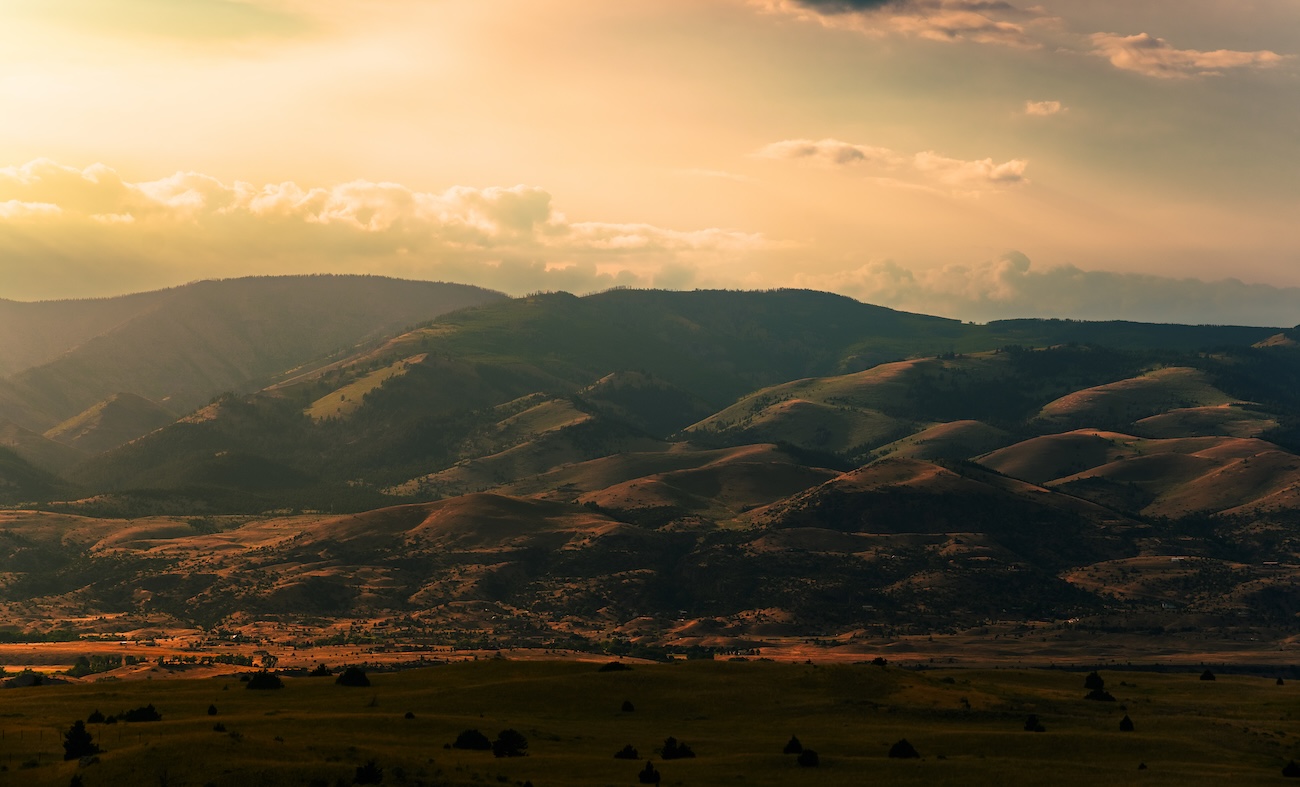

Cecil Andrus, Secretary of the Interior in the Carter administration, stood before a room filled with members of the National Wildlife Foundation. It was 1977. A new era of government had begun.
Andrus announced he was canceling dam and other infrastructure projects “because the environmental and safety consequences are more important than dollars.”
Western states were in the middle of a drought. Damming and diversionary pipelines are crucial to getting ranchers through dry spells—but Andrus wasn’t concerned about ranchers.
Andrus was dismissing human activity and entrepreneurship based on natural resources.
“The initials BLM no longer stand for Bureau of Livestock and Mining,” Andrus announced. He meant that the Bureau of Land Management would no longer be on the side of ranchers and miners—because “the days when economic interests exercise control over decisions on the public domain are past.”
It was a provocative statement. “Economic interests” is another way of saying human interests: Andrus was dismissing human activity and entrepreneurship based on natural resources. After two centuries of Americans farming, working, building, and innovating on land, the federal government had quieter plans for the huge swath of the country it controlled in the West.
The last 50 years of the West is a story of frustration—a history worth learning from.

Slowing the West Down
Up until the early ’70s, relations between BLM rangers and westerners who lived off the land were friendly. The BLM was staffed by people who were often themselves ranchers and farmers. There was an understanding of the hardships and tradeoffs needed to effectively manage public lands.
That would all be flipped on its head with FLPMA — the Federal Land Policy and Management Act of 1976. FLPMA was the culmination of a years-long debate among policymakers about how to regulate public lands. For decades, the BLM operated under the assumption that the lands it regulated were primarily for commodity use: maximizing yields for mining, logging, grazing, and such.
FLPMA says that the BLM must take into account “the long-term needs of future generations for renewable and nonrenewable resources, including, but not limited to, recreation, range, timber, minerals, watershed, wildlife and fish, and natural scenic, scientific and historical values.”
It also requires
harmonious and coordinated management of the various resources without permanent impairment of the productivity of the land and the quality of the environment with consideration being given to the relative values of the resources and not necessarily to the combination of uses that will give the greatest economic return or the greatest unit output.
That regulatory word salad had a serious effect on the West: It slowed down the productive use of natural resources.
In 1977, a proposed $3.5 billion coal plant in Escalante, Utah, was shelved—partially due to pressure from environmentalist activists, but mostly due to the sheer volume of red tape such projects now required. From an article at the time:
After thirteen years of planning, several hearings, and hundreds of pages of environmental impact statements, there still remained 220 permits and authorizations to be obtained through some 42 federal, state, and local agencies… it has become almost impossible to carry out a large project of this type.
The plant would have provided energy to major cities along the California coast. It also would’ve been a major source of jobs for the citizens of struggling Kanab, Utah. Some five hundred frustrated Kanab residents (out of a total population of 2,105!) gathered to burn an effigy of actor Robert Redford. Redford, a part-time resident of Utah, was an outspoken critic of the planned plant. The more festive amongst the protesters roasted hot dogs over the flames.
Cal the Cowboy
Cal Black was a “larger than life” character who could only be done justice in a novel. Which he was: “Bishop Love,” the chief villain in Edward Abbey’s cult classic The Monkey Wrench Gang (1975), is based on Black.
Black was a real-life cowboy. To environmentalists in the ’70s, he was a villain. From author Jonathan P. Thompson:
As a young man Cal Black hauled ore for the uranium mines, then became a prospector and mine owner himself, as well as a businessman who started two radio stations, a mortuary…a San Juan County commissioner for more than two decades, a state legislator, and even the mayor of Blanding.
He made a fortune mining uranium, a peak commodity in the ongoing Cold War. In what may have been a fatal error, he wore a uranium amulet around his neck. He had “bulldozers in his blood” and came up in a time when miners had carte blanche to do what they wanted with public lands. “If they wanted to build a damned road, by God, they’d fire up the bulldozer and build a damned road, no permission necessary.”
In 1979, while he was acting as a San Juan County (UT) commissioner, Black unleashed on BLM staffers during a meeting. “We’ve had enough of you guys telling us what to do,” he said. “We’re going to start a revolution. We’re going to take back our lands.”
Black became the chief architect of the Sagebrush Rebellion, a movement among Westerners to reclaim control of federal lands.
The Sagebrush Rebellion
Like most social movements, the rebellion was a mixed bag: Some people wanted to ensure public lands could be used productively, invoking freedom and federalism. Many were frustrated by regulations from Washington that had become unaccountable to local needs. Some ranchers wanted less federal bureaucracy while maintaining the benefits they received from federal permits and land management. Others invoked states’ rights against federal power. Some took a darker turn by issuing threats of violence and sabotage against federal officials.
Seen from a distance of 50 years, the tensions and contradictions among Sagebrush activists undermined their impact. But the history of the rebellion reveals the consequences of federal land mismanagement: discontent, disappointment, and anger. And the core of activists’ concerns remains: America would benefit from more freedom to use western lands, both public and private.
In June 1979, Nevada legislators introduced Assembly Bill 413, which asserted state control of nearly 50 million acres of federal land, about 80% of the state. In 1980, Arizona, New Mexico, Utah, and Wyoming all passed similar bills.
That summer, the BLM closed off access to Grandstaff Canyon near Moab, Utah. Locals suddenly couldn’t access hundreds of mining claims in the canyon.
People in Utah were furious. A third of the citizens of Moab worked in mining. On July Fourth, 1980, protestors drove a bulldozer into nearby Mill Creek Canyon. The bulldozer bore several bumper stickers that said: “Sagebrush rebel.”
While campaigning in Salt Lake City, presidential candidate Ronald Reagan told a crowd, “I happen to be one who cheers and supports the Sagebrush Rebellion. Count me in as a rebel.”
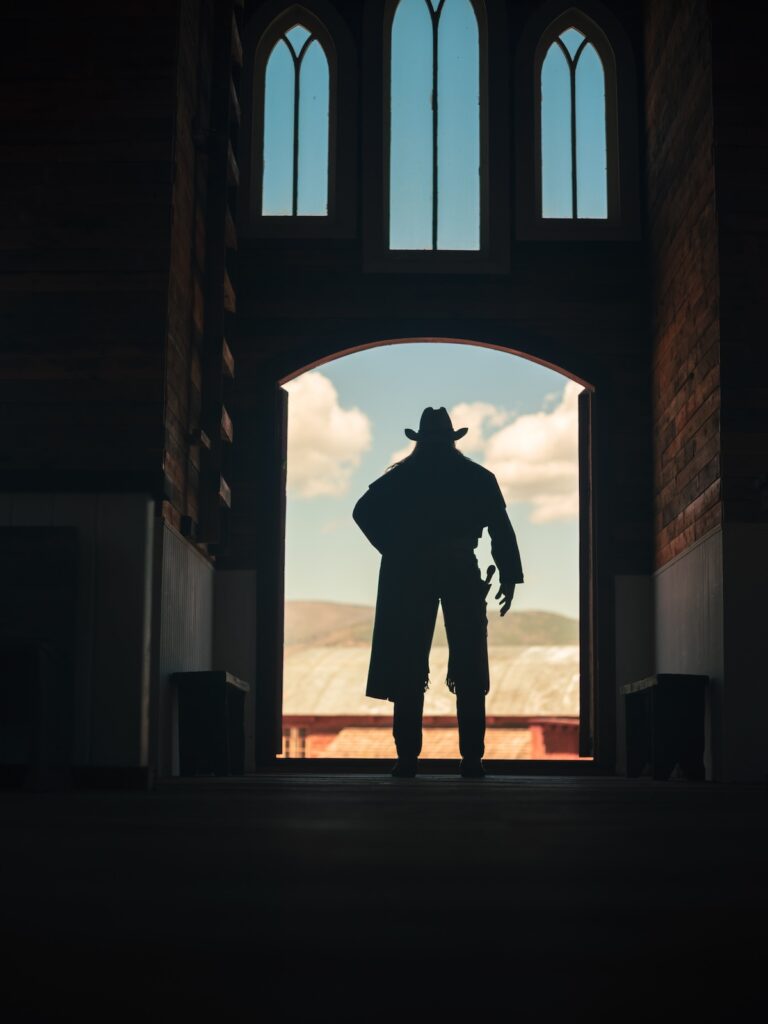
After the election, President Reagan appointed James G. Watt of Mountain States Legal Foundation as his Secretary of the Interior to help rethink federal management of Western land. During his confirmation hearing, Watt said Western frustration “has been caused by an arrogant attitude by the Department of Interior land managers, who have refused to consult and include in their decision-making process State and Local governments and land users.”
In the end, the Sagebrush Rebellion was largely symbolic. The state bills passed were legally ineffective. Cal Black was diagnosed with advanced-stage cancer at age 58.
“I look at death as an exciting new challenge,” Black told the Deseret News in April 1990. He said he had no regrets about his role in the Sagebrush Rebellion. “As long as the government owns the land, the government wields all power,” he said. He only regretted that he didn’t have more time. “Too many battles still to be fought,” he said. He died a month later.
The Future of the West
America is a natural wonder. As Teddy Roosevelt said, “We have fallen heirs to the most glorious heritage a people ever received, and each one must do his part if we wish to show that the nation is worthy of its good fortune.”
But it’s also true what was said by Gifford Pinchot, whom Roosevelt appointed as first head of the U.S. Forest Service:
Conservation does not mean provision for the future, but it means also and first of all the recognition of the right of the present generation to the fullest necessary use of all the resources with which this country is so abundantly blessed… The first principle of conservation is development, the use of the natural resources now existing on this continent for the benefit of the people who live here now. There may be just as much waste in neglecting the development and use of certain natural resources as there is in their destruction.
Whereas Pinchot believed in protecting land for the American people, current public policy protects lands from the American people—cutting off possibilities for development, production, and human flourishing.
There will always be a delicate balance in conservation. We have an obligation to ourselves and future generations to preserve the stunning natural beauty of our country.
We also need to eat. We need to power our cities and homes. We need to drive. We need to work our land—and it’s hard work. Few have what it takes to ranch, farm, log, or mine. It helps to have a certain rugged individualism and strength that’s endemic to the West. A cowboy spirit.
PLF is fighting to unleash human ingenuity so that we can use natural resources to make lives better. We need to free up the power and possibilities of the West—otherwise we’ll be left wondering where all the cowboys have gone.