
Crossing the Mountains: Then
John C. Frémont stood on a peak in the Rocky Mountains, dressed in buckskin.
It was 1842. Frémont was a roguish Army topographer from Charleston, South Carolina, who had charm, no money, and a scandalous family history: His mother was a married young socialite; his father was a French-Canadian tutor she’d run away with. Now, improbably, Frémont was leading an expedition into the American West on the orders of the United States government.
In a way, it was Frémont’s good looks that brought him to this moment. He “was said to be as handsome as Lord Byron and as mysterious as the adventurer Sir Richard Burton,” historian Andrew Rolle writes. A year earlier, back in Washington, DC, Frémont had done something rash: He’d eloped with the daughter of a prominent U.S. senator—Senator Thomas Hart Benton from Missouri, the country’s loudest proponent of westward expansion.
He wanted to push Americans out across the Rockies into unsettled territory, all the way to the blue Pacific.
Senator Benton was furious about his daughter’s marriage to the penniless Frémont. The senator wasn’t a man to cross: Nicknamed “Old Bullion,” he’d already killed one man in a duel and famously left a bullet in Andrew Jackson during another gunfight.
But what Benton cared about most was mapping out the American West. And now he had an ambitious topographer for a son-in-law.
The Western United States was still wild and largely undiscovered. Many Americans assumed it would always stay that way: Before the Louisiana Purchase in 1803, a New England congressman complained that the “Constitution never was, and never can be, strained to lap over the wilderness of the West.” An 1820 government expedition called the West “a Great American desert,” that was “almost wholly unfit for civilization.”
Senator Benton disagreed. He wanted to push Americans out across the Rockies into unsettled territory, all the way to the blue Pacific. That meant unlocking the West’s secrets—showing the public that the West was rich with timber, minerals, animals, grains, water, and almost-endless stretches of land. Benton needed the country to see what he already believed: The West was America’s future.
And so in the spring of 1842—with government funding secured by his father-in-law—John C. Frémont left his now-pregnant wife in DC and led a group of explorers West with an edict to report back to the government. The team would draw the plants, animals, plains, and rivers they found; they’d record latitude, longitude, and altitude daily; and Frémont would keep a detailed journal.
The eventual report on this expedition would become “one of the most influential U.S. government publications of the nineteenth century,” Stephen Weiss writes. It was “an adventure story, a travel book, and an emigrants’ guide to settlement of the American West” that “provided the American people and federal policymakers with their first connected view” of everything the West could offer. It also began a long, complicated relationship between the federal government and Western development.
Now, almost two centuries later, much of the plains and peaks Frémont freely explored are under tight government control. What was seen through Frémont’s eyes as a landscape rich with infinite opportunities—natural resources that would set off westward expansion, ignite the Gold Rush, and define the cowboy spirit of the Old West—has become rife with restrictions: paths closed, lands locked up, and penalties threatening those trying to pursue freedom and happiness in the New American West.
Crossing the Mountains: Now
Michelino Sunseri stood on a peak in the Rocky Mountains, dressed in sportswear. Then he ran down the mountain.
As he’d hoped, his run beat a record. Michelino made it up and down Grand Teton that day, September 2, 2024, in 2 hours, 50 minutes, and 50 seconds—almost 3 minutes under the previous fastest running time.
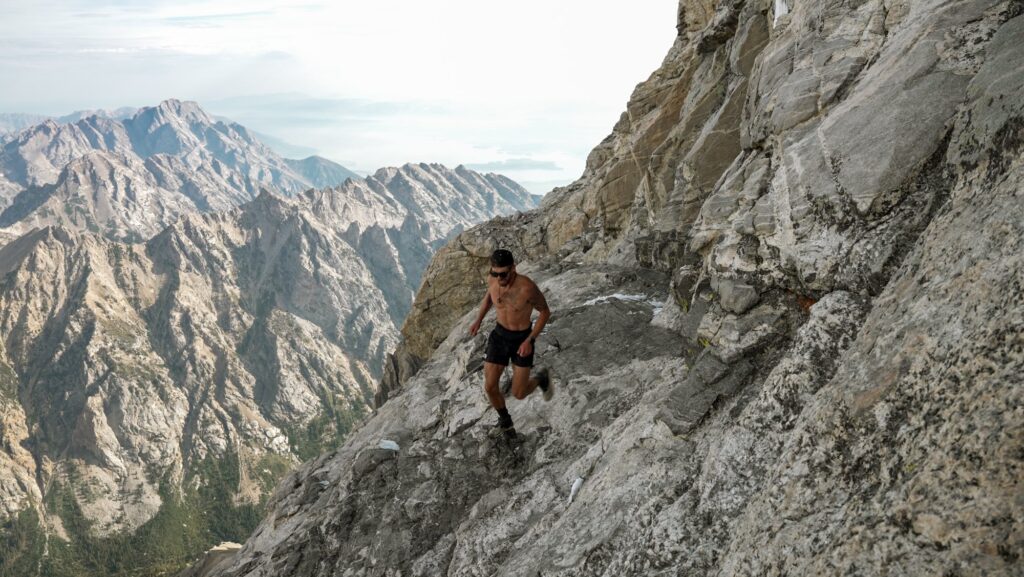
Less than a week later, Michelino learned the National Park Service was pursuing criminal charges against him for running on a “restricted” trail. He’d chosen to run on a social trail, a commonly used path not formally designated as a trail. The National Park Service—which now manages 84 million acres of land, including this part of the Rockies—said Michelino broke federal law and could be fined or imprisoned.
Pacific Legal Foundation is now representing Michelino. As of publication of this magazine, the verdict on his criminal charges is pending.
American Timber: Then
“The morning was cool and smoky,” Frémont wrote. His group, which included his wife’s 12-year-old brother, traveled on horseback through miles of woods. Almost daily, Frémont noted what kinds of trees surrounded him—as if, in each region, he imagined what could be built and crafted from those forests. On this particular day: “We crossed during the morning a number of hollows, timbered principally with box elder, poplar, and elm,” he wrote.
American Timber: Now
On most days, the workers of Viking Lumber Company are busy at the sawmill—the last sawmill of its kind in the area. It’s not clear how much longer the company will be allowed to operate like this.
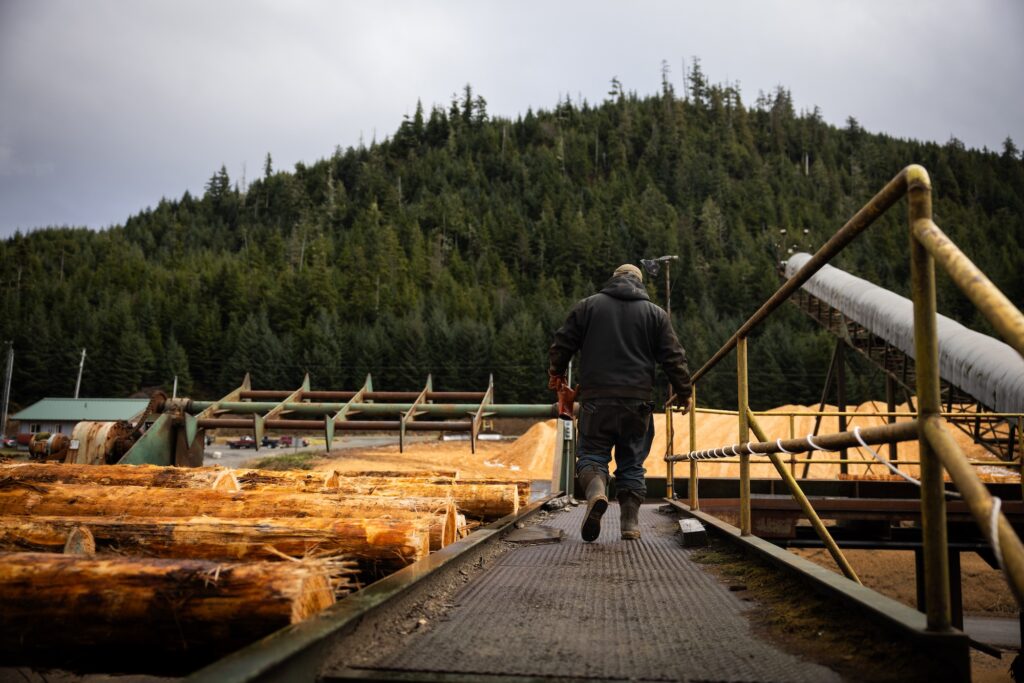
Up near the Tongass National Forest in Alaska, where Viking is, the federal government owns 94% of the land. The timber up here is used in Steinway pianos (which date back to John Frémont’s time), Gibson Guitars (which date back to 1894), and helicopter blades.
But the Department of Agriculture—issuing rules from 2,700 miles away in DC—is now restricting the sale of old-growth trees. A 4,000-person industry has shrunk to fewer than 300 people. The community up here may disappear altogether.
Pacific Legal Foundation represents Viking and other lumber companies in a lawsuit against the federal government.
Digging Below the Surface: Then
Frémont’s expedition collected rock and mineral samples from across the country. They sent the samples to famed paleontologist James Hall, who contributed an appendix to Frémont’s report.
Describing limestone samples collected from what’s now the state of Colorado, Hall wrote:
A calcareous formation of this extent is of the greatest advantage to a country; and the economical facilities hence afforded in agriculture, and the uses of civilized life, cannot be overstated.
Digging Below the Surface: Now
In Southwest Missouri, near the Oklahoma border, is an open-pit mine. It’s been in operation since 1869, extracting silicon dioxide from the ground for use in products like glass and toothpaste.
But American Tripoli, the company that owns the mine, is now battling unjust charges and fines from the Federal Mine Safety and Health Review Commission. The Commission uses an in-house tribunal to adjudicate claims—forcing American Tripoli, which is owned by a father and daughter, to defend itself before a judge that works for the Commission.
Pacific Legal Foundation now represents the company in a lawsuit challenging the tribunal process as unconstitutional.
Utah: Then
Frémont’s expedition rode alongside a river. There were so many grasshoppers, Frémont wrote, “that the ground seemed alive with them; and in walking, a little moving cloud proceeded our footsteps.”
An hour’s travel brought the group “into the fertile and picturesque valley of Bear River, the principal tributary to the Great Salt Lake,” Frémont wrote. The area seemed to entrance the men:
We were now entering a region which for us possessed a strange and extraordinary interest. We were upon the waters of the famous lake which forms a salient point among the remarkable features of the country, and around which vague and superstitious accounts of the trappers had thrown a delightful obscurity, which we anticipated pleasure in dispelling, but which, in the mean time, left a crowded field for the exercise of our imagination.
Utah: Now
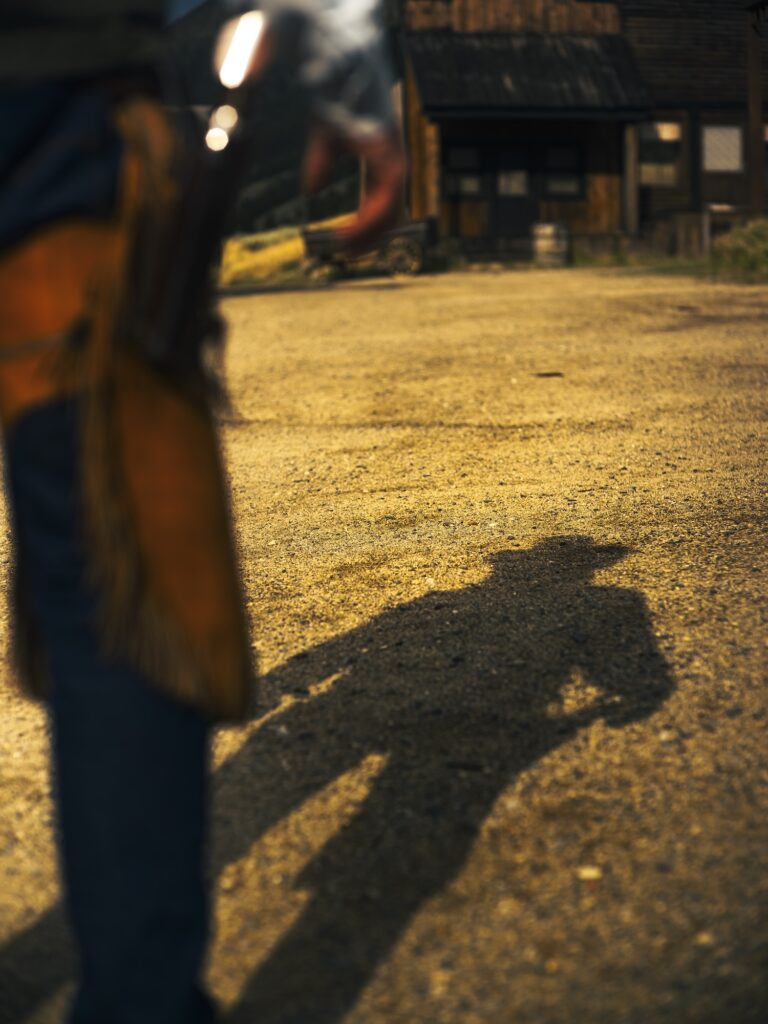
At 9:30 a.m. on Monday, January 14, 2025, the Supreme Court released its list of orders. The case of Utah v. United States was denied.
It would have been a historic case: The State of Utah was trying to sue the federal government over its management of state land. Nearly 70% of Utah is owned and controlled by the federal government. The government has become, as an amicus brief submitted by Utah counties put it, a “remote, unaccountable, and extra-constitutionally perpetual Federal landlord.”
The Framers of the Constitution never envisioned this, Utah argued. PLF agreed.
“Most of Utah is not governed or controlled by the governor, the state legislature, or state agencies—it is governed by federal bureaucrats,” PLF wrote in our amicus brief. “[D]espite the Constitution’s careful design, the federal government exercises federal police power over much of the West[.]”
But the Supreme Court wouldn’t hear the case. U.S. Senator John Curtis, who grew up near the Great Salt Lake, was disappointed.
“Building roads, moving cattle, and cleaning up campgrounds all require navigating a behemothic bureaucracy that’s stacked up against the average Utahn,” he said.
Farmland: Then
John C. Frémont came to a plain bordered by a lake. Here, Frémont reported, “the soil is generally good, and in greater part fertile; watered by a delta of prettily timbered streams. This would be an excellent locality for stock farms; it is generally covered with good bunch grass, and would abundantly produce the ordinary grains.”
Farmland: Now
The puddle on Arlen Foster’s farm isn’t always there. But every winter, the tree belt on the south side of the farm collects snow drifts; and when the snow melts, it forms a small, flat puddle in the middle of the Fosters’ farm field.
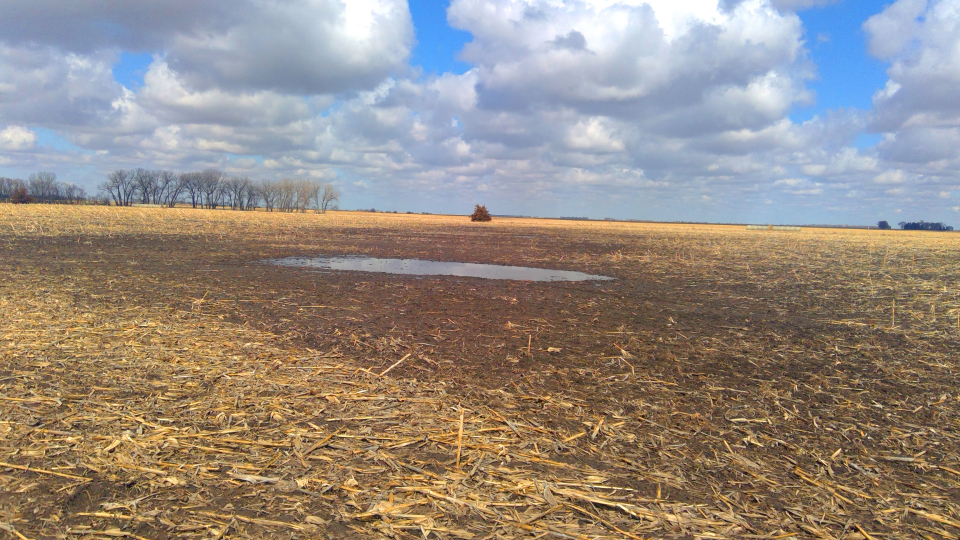
According to the federal Natural Resources Conservation Service, this puddle is a wetland protected by federal law. That means Arlen can’t legally farm it. When Arlen tried to challenge the wetland designation back in 2017 (and again in 2020), the government refused to reconsider—even though the puddle is, quite clearly, only a puddle.
PLF has represented Arlen in a federal lawsuit since 2021. After an initial victory last year at the Supreme Court—in which the Court ordered the lower court to reconsider the case without deferring to the federal government—the case is back at district court, where Arlen continues to fight for his rights.
The Government and the West: Then and Now
When he returned to DC, a restless Frémont had trouble finishing his reports for Congress. He ended up dictating to his wife, Jessie.
“The horseback life, the sleep in the open air, had unfitted Mr. Frémont for the indoor work of writing,” Jessie later explained.
With her help, Frémont published an initial 1842 report about his first expedition, which went as far as the Rockies; then another report after his second expedition, in 1843-44, covered California and Oregon.
Frémont’s writings on both expeditions were published in a combined volume that astonished and excited the public. It “stimulated a national urge for westward expansion,” Stephen Weiss writes. Americans had a new, dawning awareness that they could shape their destinies out West by exploring and finding value in the land’s natural resources. The West was more than a region; it was a new American identity, defined by a confidence in man’s ability to transform the wilderness by building, growing, and innovating—carving towns, farms, and mines from the rocks, forests, and dirt.
But quietly threaded into the story of the West, from the beginning, was the federal government’s interest in controlling access to it. The government funded and directed Frémont’s westward adventure. Since then, its invisible presence in the West has only grown—especially since the 1970s, when the government began shutting down the production of energy, minerals, and other raw materials. While federal authorities once encouraged pioneers and cowboys to make something new in the West—applying labor and creativity to the land—now they discourage it.
Today there’s virtually no facet of Western life the federal government doesn’t attempt to control. But Pacific Legal Foundation—which was born on the West coast then expanded eastward, with staff now spread across the country—is working tirelessly to unwind this control.