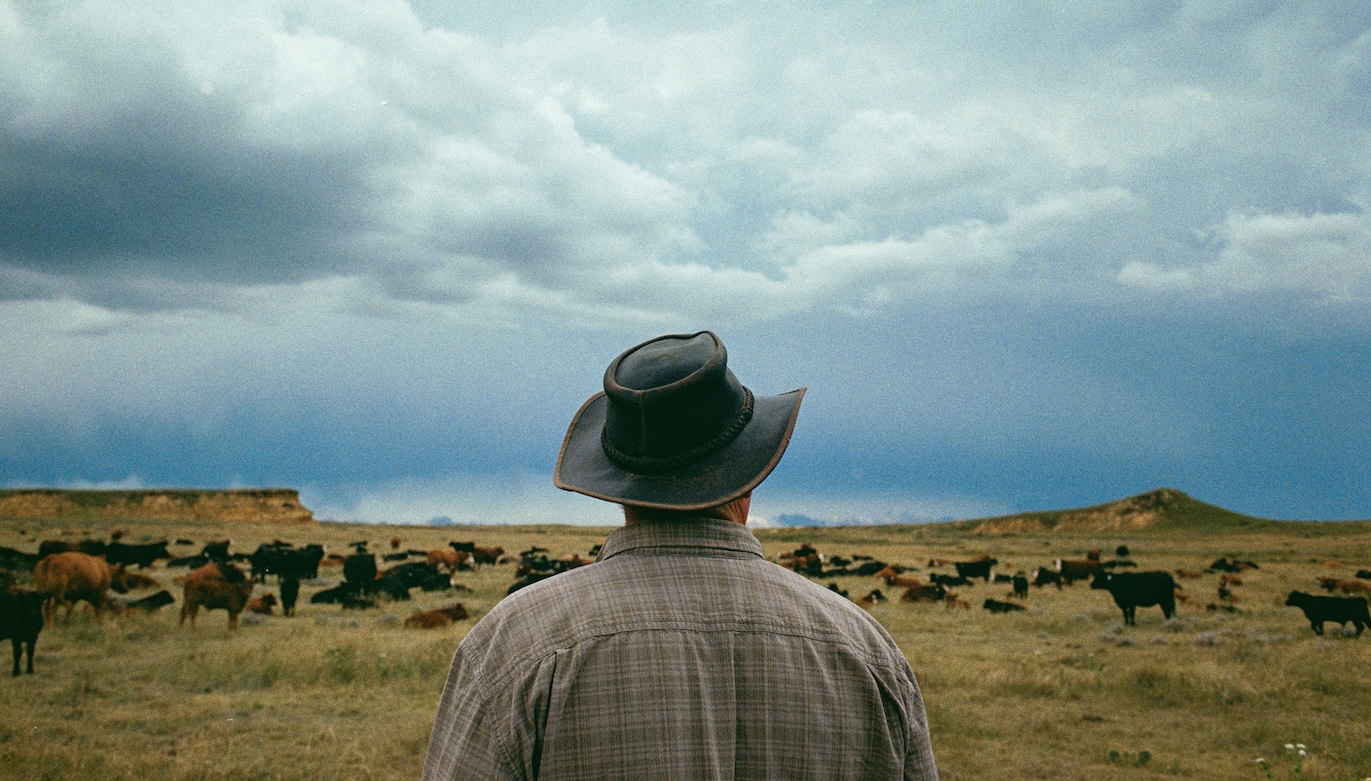
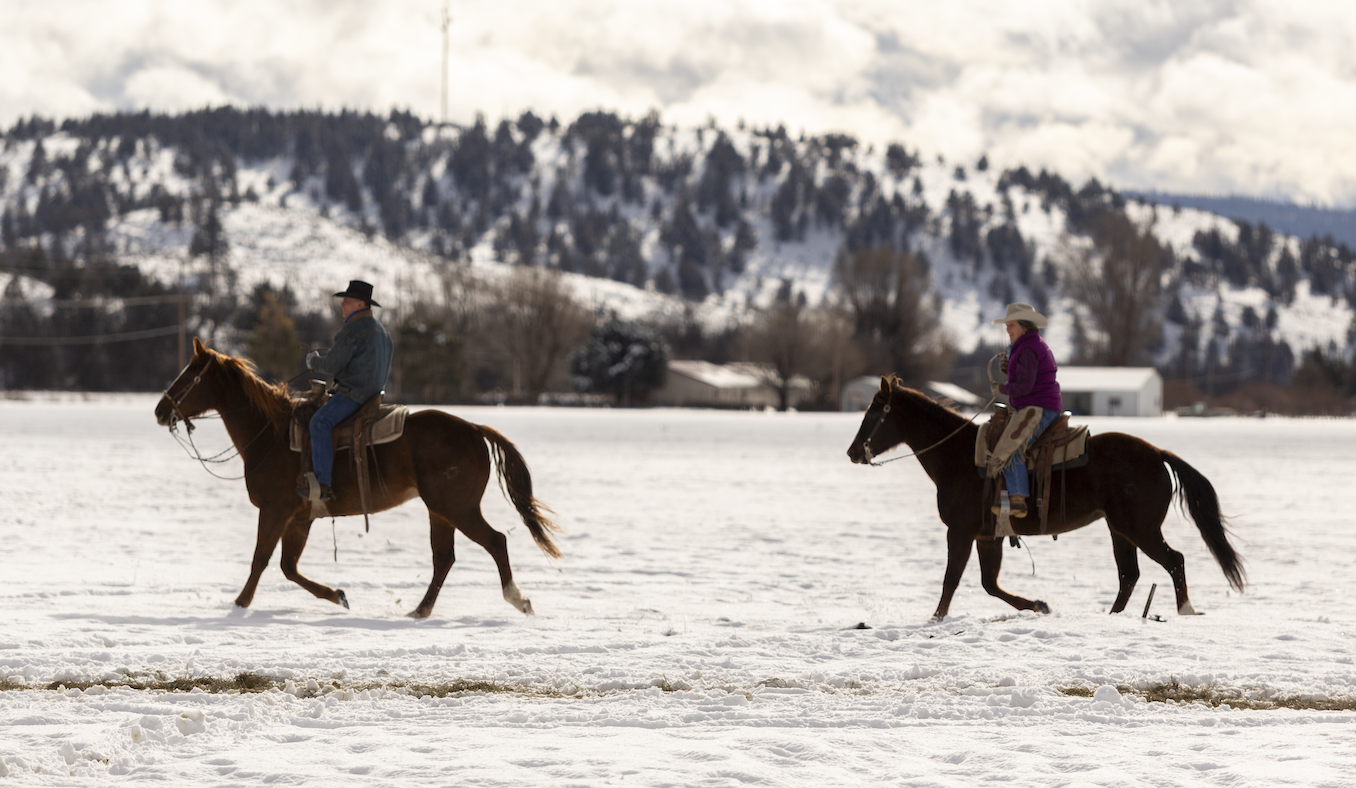


As the sun slips behind the mountain ridges in Sierra Valley, California, local ranchers fear their livestock won’t survive the night.
Nearly every inch of the valley’s 120,000 acres is made up of private ranches, where cattle and other livestock vastly outnumber the human residents. To the ranchers, the cattle are their livelihoods, but to the hungry gray wolf, they are an easy meal. And once the wolves are shrouded beneath the cloak of night, they close in for the kill.
Wolf attacks have become a regular occurrence in the region. From mid-March to the end of May alone, 30 wolf attacks on livestock were reported. Eighteen were fatal. The fatalities aren’t a product of the ranchers’ neglect—on the contrary, these ranchers would love nothing more than to protect their livestock. California law, however, has tied their hands, leaving ranchers with little recourse aside from shooing away the insatiable wolves.
Under the California Endangered Species Act (CESA), the gray wolf is a protected animal—and killing one is a criminal offense that carries fines of up to $100,000, along with the possibility of spending one year in prison. Whether the wolf is killed in defense of livestock matters not, which means the ranchers are forced to choose between saving their cattle or facing criminal charges.
Perhaps the most frustrating aspect of this situation is that there was no logical reason for the gray wolf to be listed under the CESA in the first place.
The Commission that Cried Wolf
The California Endangered Species Act, which is distinct from the federal Endangered Species Act, gives unilateral power to the state’s Fish and Game Commission to regulate all wildlife in the state. In 2014, the Commission made the decision to add the gray wolf to the state’s endangered species list, even though its reasoning defied its own rules.
Sierra Valley rancher Dan Greenwood lost almost two dozen livestock to wolf attacks.
For a species to make the list, the Commission’s decisions must meet specific criteria, the first of which is that the species be native to the State of California. But the gray wolf isn’t: It originates in Canada and, at the time of the listing, had never been native to the Golden State.
Next, the Commission must show sufficient evidence that a species has an established presence within California. The recorded basis for the gray wolf’s listing was a single wolf that occasionally crossed the border into California from Oregon.
Lastly, the Commission must base its decision not just in the context of California but in the context of the wolf’s population in other states, which it did not do. If it had, commissioners would have understood that the gray wolf population is far from the risk of extinction: Since the mid-1990s, when the United States Fish and Wildlife Service introduced gray wolves into Idaho, the wolf population has grown and expanded into neighboring Oregon. Other nearby states, like Montana and Wyoming, have seen an explosion of gray wolves—so much so that they now allow for the animals to be hunted.
Yet in California, killing a wolf in defense of livestock is a crime.
The California Department of Fish and Wildlife—a different state agency responsible for enforcing California’s wildlife laws—said the gray wolf should not be on the endangered list because the animal “is not currently facing or enduring any threat in California at this time.” Despite this, the Commission proceeded to list the gray wolf as an endangered species.
Unfortunately, California ranchers are now paying the price for the Commission’s unfounded decision.
Ranchers Take a Stand
The Commission’s decision left Northern California ranchers at the mercy of the gray wolf. The damage to livestock can’t just be measured in the number of actual attacks. When wolves make frequent appearances on a ranch, livestock live in a constant state of terror. That stress takes a physical toll on a herd. Stressed cattle are more susceptible to illness and are less likely to reproduce. Many infectious diseases result from a combination of viral and bacterial infections brought on by stress in cattle. Even in disease-free cattle, stress affects the quality of meat: Stress prior to slaughter is thought to be a contributor to “dark-cutters,” meat which is almost purple instead of the usual cherry red. Dark-cutters are discounted because they’re difficult to sell—creating an additional financial burden for ranchers visited by wolves.
In 2017, the California Cattlemen’s Association, which represents over 2,000 ranchers, and the California Farm Bureau Federation challenged the California Fish and Game Commission in court over the gray wolf’s endangered status. Pacific Legal Foundation represented the groups in their fight. We argued that the Commission exceeded its statutory authority, undermined sensible wildlife protections, and violated state law. Unfortunately, the California Superior Court ultimately sided with the Commission (and the wolves). The Commission “is entitled to deference” and “[t]he court must err on the side of protecting the [wolf] species,” the judge said in a short ruling.
Some groups celebrated ranchers’ legal defeat.
“Wolves are coming back to California,” said Tom Wheeler, executive director of the Environmental Protection Information Center, “and today’s decision gives them a red carpet to return home.”
This spring, the Los Angeles Times reported on how bad things have gotten for California ranchers. One rancher—whose three-month-old calf was mauled by wolves—told the reporter his ranch had become “a death trap.”
Sierra County District Attorney Sandra Groven is tasked with prosecuting ranchers who break the law. But even she thinks the law protecting wolves makes no sense. She told the Los Angeles Times that she would not pursue charges if a rancher killed a wolf to protect livestock. “Bottom line, I would not prosecute. What are they supposed to do? Run up and wave their arms and say, ‘Go away’?”
Ranchers are allowed to engage in non-lethal hazing of wolves, like firing a gun in the air or attempting to scare the predators away with loud noises. But ranchers say that even if these methods were effective—and they’re not always—they require ranchers to stay up all night in the pastures, guarding their livestock.
And over time, wolves have overcome their fear of humans.

In 2022, Sierra Valley rancher Dan Greenwood lost almost two dozen livestock to wolf attacks. Greenwood had been a longtime advocate of finding a way to mitigate the wolf problem without deadly force. But after years of trying to protect livestock while obeying the law, Greenwood has lost hope. “We feel like our hands are tied,” he told the LA Times. “We’re exhausted, and there’s zero help.”
The ranchers and local authorities are now begging the State to allow more aggressive tactics to be used against the wolves. The government clearly recognizes that the problem exists. In 2021, the state even piloted the Wolf Livestock Compensation Grant program to compensate ranchers for livestock lost to the wolves and provide funding for non-lethal means of protecting their animals. In 2022, Greenwood completed the mountain of required paperwork only to learn that the State had run out of the $3 million allocated to the program. He never received any compensation. Another $2 million was allocated this year. That too will run out.
And California isn’t alone. Colorado ranchers have also seen an uptick in wolf attacks. In 2023, Colorado released a pack of wolves as part of a re-establishment program. Colorado Parks and Wildlife (CPW) promised to alert ranchers when the wolves, which are collared and tracked, got near their property. Range riders were also deployed to monitor livestock and look out for wolves. But Colorado has fallen short of keeping these promises.
Tom Harrington, president of the Colorado Cattlemen’s Association, says a wolf killed a calf on his ranch one day. The next morning Harrington received a call from the state district wildlife manager.
Harrington recounted the conversation to The Colorado Sun: “He says, ‘Hey, you got a wolf on you. I just wanted to let you know.’ And I said, ‘Yeah, I found out yesterday. Where the hell were you?’”
A History of Bad Decisions
Wolves are a feature of the American frontier. On their journey into the Dakotas in 1805, Meriwether Lewis and William Clark reported watching a pack of wolves hunt bison. For years, government agents tried to exterminate wolves in cruel and vicious ways—using strychnine poison, gas, and disease to wipe the species out. (A Montana law required state officials to inject wolves, wolf pups, and coyotes “with the contagious disease known as mange,” then release them to their packs “as an experimental method for the extermination of wolves and coyotes within the state.”) Now, perhaps to make up for its own historic mistakes, the government has swung the pendulum too far the other way—making wolves legally untouchable even if they’re circling a ranch, ready to pick off livestock one by one.