

Late after business hours on Friday, September 26, 2025, California Coastal Commission staff published a 1,200-page report on the Commission’s website. The long report was a recommendation to commissioners: to fine John Levy, a Carlsbad homeowner, $2.5 million over two locked gates. A hearing was thirteen days away.
When John asked for a continuance—he needed more time to go through the report and prepare a defense—the Commission refused. By the time the hearing began, staff had added 300 more pages to their report. All of it stacked against John.
It’s like getting pulled over by a cop in Tijuana, John says. “They keep the money.”
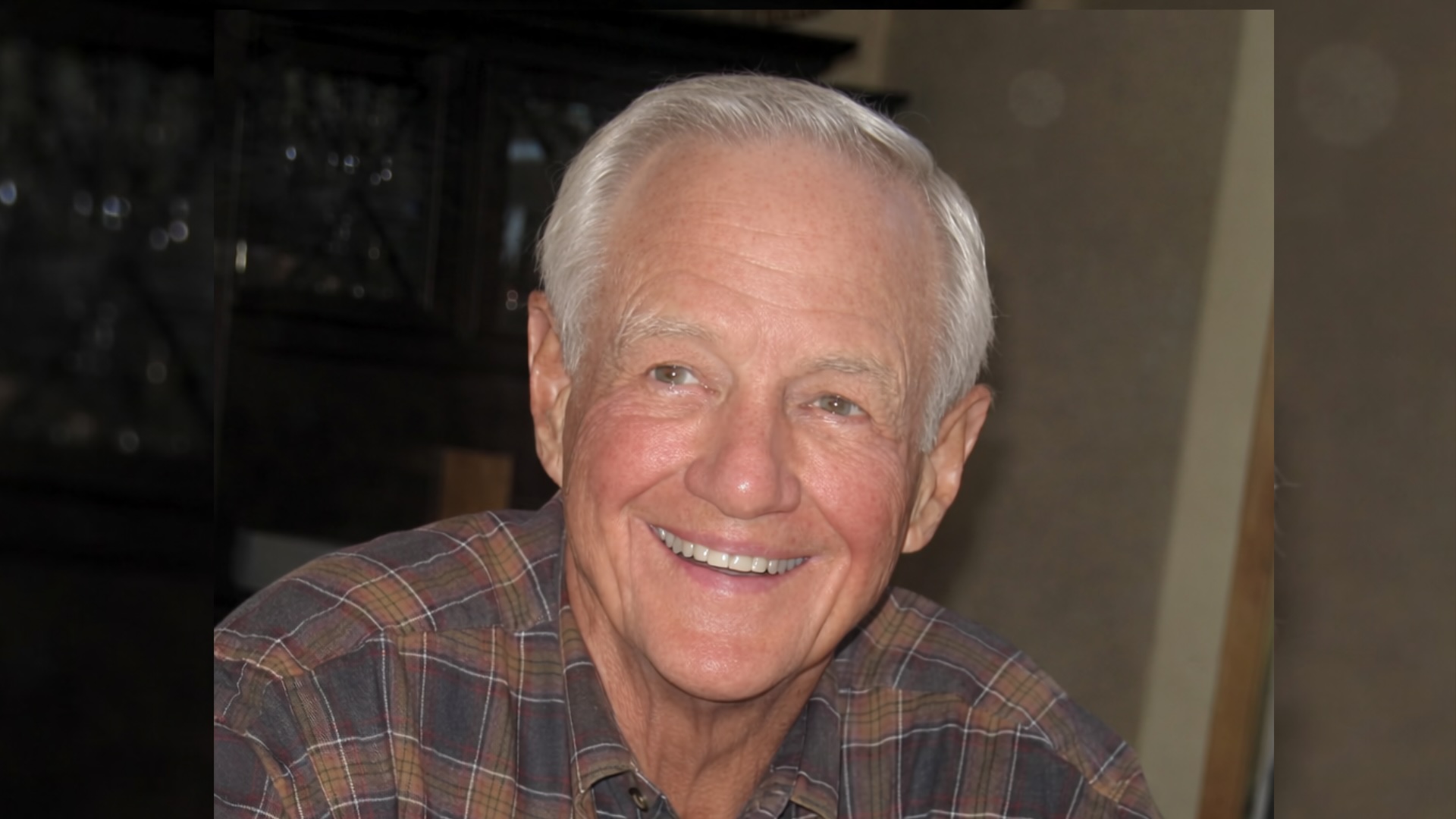
John Levy is the owner of “Levyland,” a 3,700-square-foot, one-bedroom home that sits along a lagoon in Carlsbad. He built it in 1998. “I was a bachelor, dude,” says John, now 75. “This is a bachelor house.” The ceilings are thirty-two feet high. In the eighties, John invented an adjustable dog collar that he fashioned like a backpack strap instead of a traditional belt. He built Levyland after he discovered this three-acre property while walking his dogs through the neighborhood. “It’s too small for a big developer and it’s too big for a small developer,” he explains. It suited him.
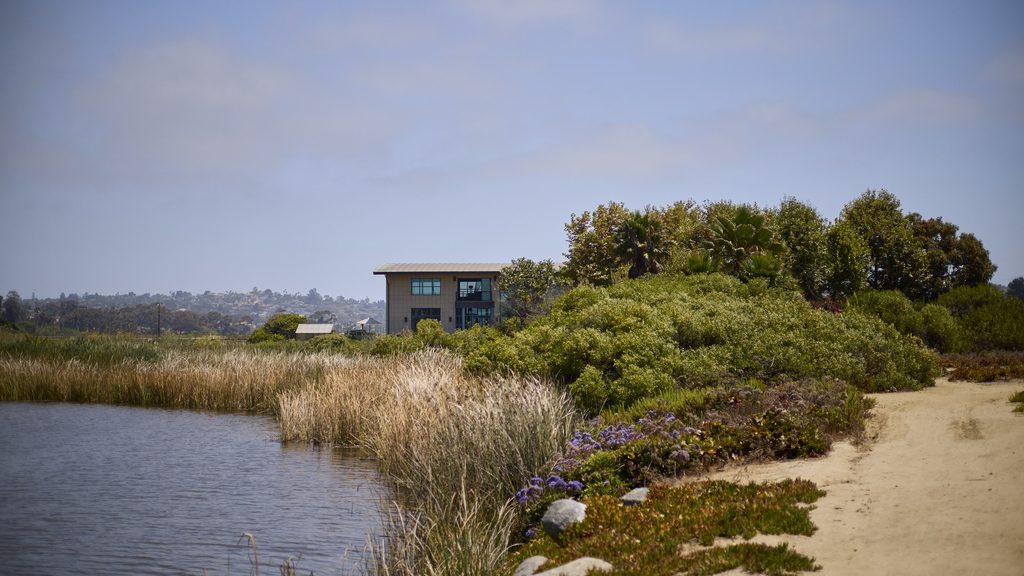
He was able to get a coastal development permit back in 1998. But starting in 2017, the Coastal Commission decided it had a problem with two gates: a chain-link gate leading to a footpath that goes down to the lagoon, and an electric vehicle gate at the top of John’s driveway, which is actually on the property of a neighboring homeowners’ association.
The Commission said the two gates blocked public access to the beach. It ordered him to remove the gates or face penalties up to $11,250 per day.
Penalty Power
The Coastal Commission hasn’t always had the power to make people pay.
From 1972 to 2014, if you found yourself in trouble with the Commission, you’d be taken to state court. The Commission would make its case before a judge. You’d have the presumption of innocence.
That changed in 2014, when California’s state legislature gave the Coastal Commission its own kinglike power to penalize. No court necessary. According to a Pacific Legal Foundation report, the Commission assessed penalties of almost $40 million between 2016 and 2024—including a stunning $4.2 million fine imposed on PLF clients Warren and Henny Lent in 2016. (“This would destroy a lifetime of work,” Warren objected at the time. The Commission was immovable.)
For the Commission, fines are a no-brainer. They achieve two things. One, they terrify people into compliance. Two, they fund the Commission’s own work. Money from the “Violation Remedial Account”—where most fines are deposited—paid for the Coastal Commission’s database upgrades, restoration projects, and staff salaries.
It’s like getting pulled over by a cop in Tijuana, John says. “They keep the money.”
Trying to Force a Settlement
The problem with ruling by fear is some people don’t get scared.
John has another home in New Zealand, a working farm where he raised his kids. He grew up surfing in California, but it was in New Zealand that he learned foil riding—an electric water sport. “It’s basically a little small model glider on a mast mounted to a surfboard,” he says. “You get about two feet off the water going very quickly—like 30 miles an hour on the water. It’s all weight balance. One false move, one hand goes too far out—boom, you crash.” It’s similar to flying, he says. He also flies helicopters.
If you love the feeling of flying fast along the water and through the air, you’re not the kind of person who panics at a letter from the California Coastal Commission. “I wrote ’em back and I just said, ‘Look. I’m sorry, but you’re mistaken,’” John says.
The pedestrian gate on John’s property did not block a public easement, contrary to the Commission’s claims. The City of Carlsbad never accepted the footpath as an easement—likely because it’s a short “path to nowhere,” as John argues, and doesn’t even provide views of the lagoon.

As for the vehicle gate: “It’s not my gate,” John says simply. It’s an access point onto his property, and he helped the homeowners’ association that owns the property upgrade from a mechanical gate to an electric one years ago. But it belongs to the homeowners’ association. “It’d be like me going over to your house and opening up your gate and leaving it open.”
The Coastal Commission wasn’t convinced. In 2024, the Commission sent John a cease-and-desist order over the gates and a pickleball court on his property, which the Commission said required a permit.
Over the following months, John exchanged back-and-forth letters with the Commission.
“I have repeatedly asked for structured, transparent, and on-the-record meetings,” he wrote in May 2025. “You have insisted on confidential, unrecorded conversations, which are neither required nor appropriate for a matter involving public access, penalties, and state enforcement.”
In July, he told the Commission: “You are attempting to impose penalties not as a last resort, but as leverage to force settlement on your terms.”
The Hearing
On the morning of October 9, 2025, the Coastal Commission met in a ballroom at a marina hotel in Redondo Beach. John appeared by video from New Zealand.
Commissioner Ray Jackson called John’s conduct “a direct affront to the people of California”—because he hadn’t surrendered to the Commission’s demands.
John remembers feeling like the deck was stacked against him.
“I was in New Zealand by myself, and I just felt the whole onslaught of the State of California,” he says. “I mean, this is bizarre.”
That afternoon, the Commission voted to fine John $2.5 million.
“They want the gate gone,” John says.
“The Coastal Commission—you have to understand that they’re the investigator, the prosecutor, the judge, the jury, and the beneficiary of all the fines they get.”
About a million dollars of the fine—$1,071,562—was suspended: It would be waived entirely, the Commission said, if John opened the vehicle gate. So he did, three days after the hearing. He also opened the pedestrian gate.
“This is straight-up extortion, what they’re doing to me,” he told The Wall Street Journal.
The Lawsuit
A month and a half after the hearing, John filed a lawsuit against the Coastal Commission for issuing punitive fines without due process. He is represented by Pacific Legal Foundation.

“I’m greatly honored to have you guys represent me,” he says. The Coastal Commission “is a state agency that has gone nutty,” he says. It has too much power. “I mean, come on. I believe in America. I believe in the democratic process. And it’s just like, what is going on with these clowns?”
When The Wall Street Journal spoke to John’s neighbors, they discovered a sad twist in the case: Now that the pedestrian gate is open, the neighborhood is worried about safety. Children could wander down to the lagoon. Strangers are speeding ebikes down the path.
Meanwhile, the beach is safely accessible through a nearby public staircase—just as it’s always been, long before John opened the gates.
There’s a silver lining in John’s ongoing fight with the Coastal Commission, as frustrating as it is. John is seventy-five. “And cognitively, this has just raised my game back to how I was in my thirties and forties,” he says. “I was a real hard-charger.” He is immersed in the details of his case. He is energized to fight the Coastal Commission. He has no intention of giving up. “And I’m actually really enjoying it,” he says.