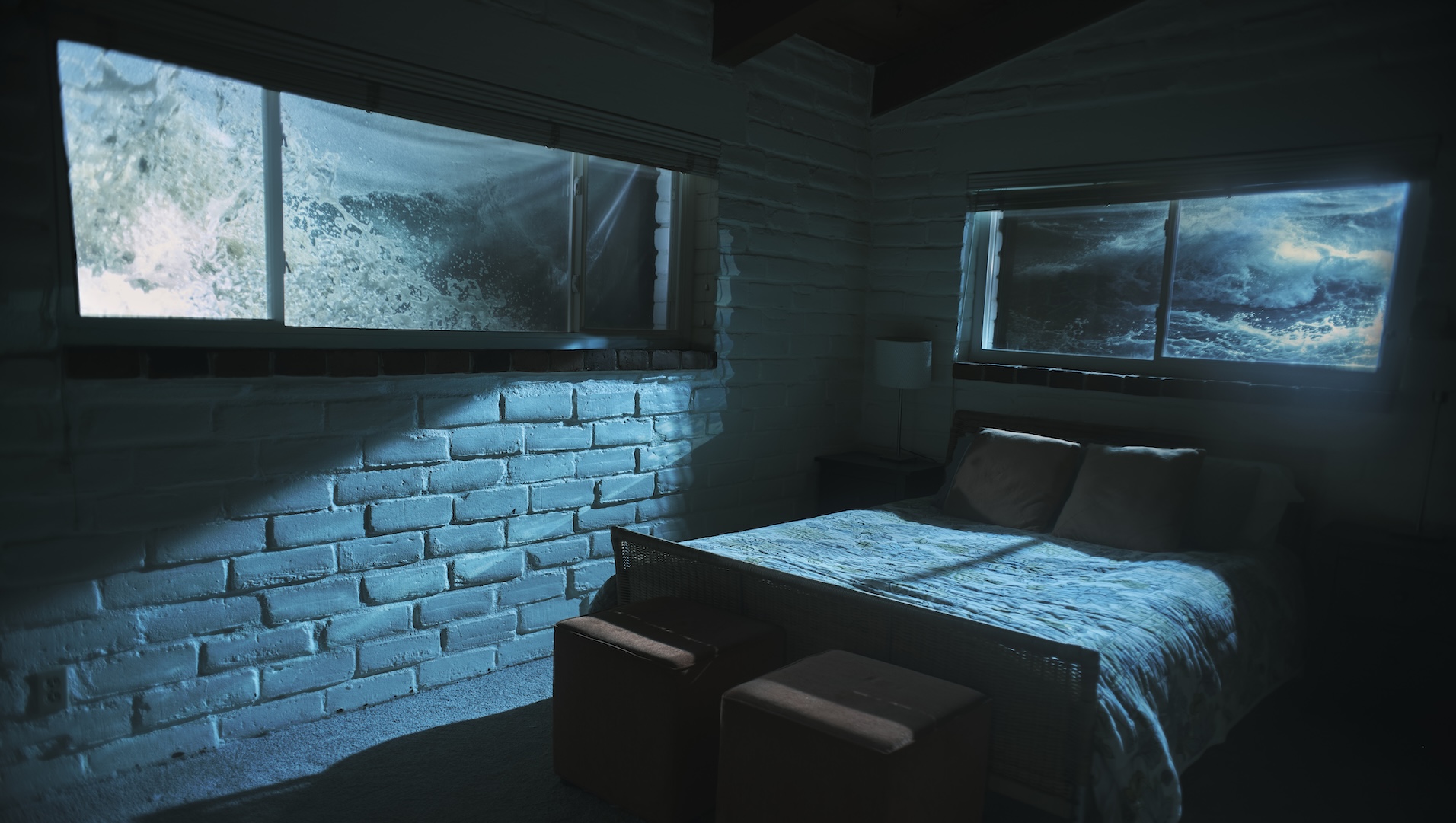

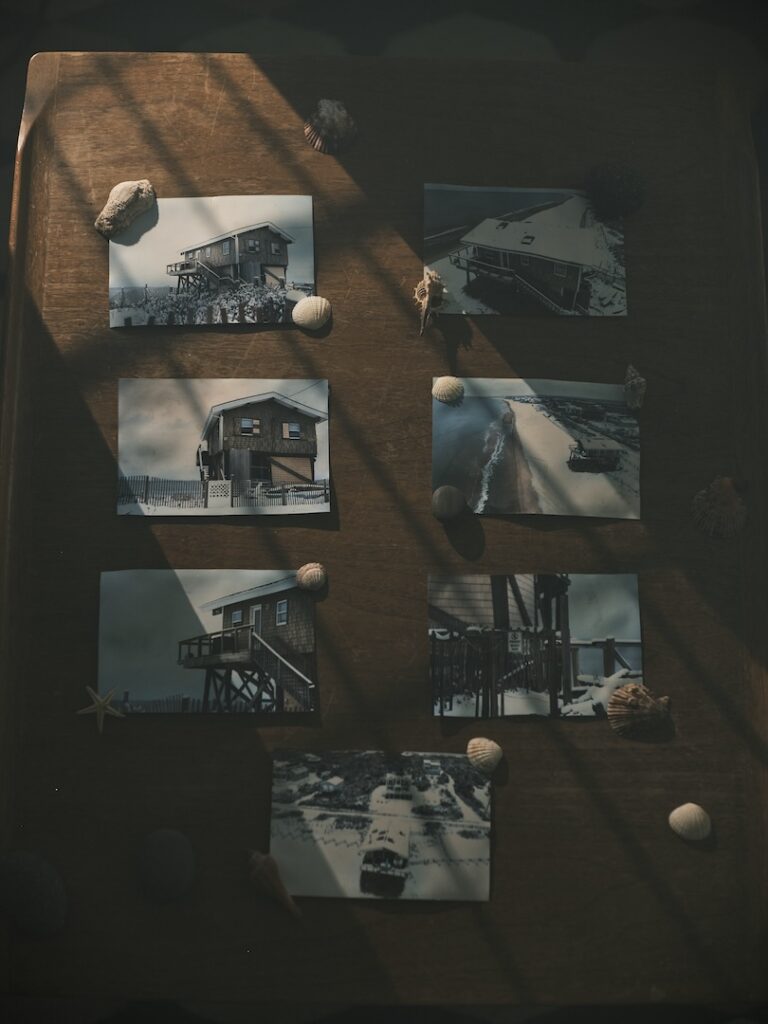
On a barrier beach in South Kingstown, Rhode Island—a narrow crescent of sand separating Ninigret Pond from the open blue-grey waves of Block Island Sound—there stands a fifty-year-old house on stilts. It’s perched above the beach like it’s keeping watch on the water, waiting to see what the waves will do next.
The owner of the house is David Welch. In January 2023, a brutal winter storm battered this area of the beach. The sea rushed in around the house on stilts, damaging its stairway. The dunes shifted. Rip-rap boulders—placed under the home long ago to absorb the waves’ power—moved.
David applied for what’s called a “Maintenance Assent” from the state coastal agency. He needed the agency’s permission to fix his property after the storm. The agency granted permission.
But then it issued a cease-and-desist. And it announced new, shocking conditions on David’s desire to finish repairing his home.
In Rhode Island, it seems, the storm is just the beginning. The real damage to your home comes afterward, at the hands of the State.
After a storm comes, you rebuild. That’s life on the coastline.
A Coastal Horror
Rhode Island is the smallest state in the country—only thirty-seven miles across at its widest, yet possessing, by virtue of Narragansett Bay, some four hundred miles of shoreline.
H. P. Lovecraft, the master of American horror, grew up in Rhode Island. He wrote of a haunted coastline “where mists and the dreams of mists stop to rest on their way from the sea to the skies.” Among Lovecraft’s creations is the myth of the Cthulhu, a scaly, god-like monster that sleeps in the ocean and, with its cosmic and terrible power, reminds man of his insignificance. It’s not hard to imagine where Lovecraft found his inspiration. Again and again in Rhode Island, wind and waves have come out of the sea to rearrange and destroy homes on the coast. The worst came in 1938, the year after Lovecraft died: The Great New England Hurricane killed 300 people. “Villages Vanish,” declared The Providence Journal the morning after the storm. “Coast Changed.” On the barrier beach where David Welch’s house now stands, homes were swept clean away.
After a storm comes, you rebuild. That’s life on the coastline. That’s what David planned to do with his damaged house after the 2023 storm. But something else was brewing in the state capital.
In June 2023, the Rhode Island General Assembly—backed by a coalition of surfers, birders, and public-access advocates—passed a law moving the boundary of public beach from the mean high tide line to a line lying ten feet inland of the seaweed line. This meant that areas of beachfront land that were previously private were not part of the public beach.
For David and other property owners, the new law was a taking of private property. The strip of dry sandy land that previously belonged to them, beside or underneath their homes, was now public property. And they hadn’t been compensated for this sudden loss of land.
David, represented by Pacific Legal Foundation, filed the first lawsuit. Rhode Island lawmakers “apparently don’t want to pay when they take private beach land for public use,” David Breemer, PLF senior attorney, told a local news station. “They just write a law declaring that it’s now public property.”
In July 2024, Associate Justice Sarah Taft-Carter of the Washington County Superior Court issued a ruling that gave PLF a major victory. Moving the boundary line inland was “clearly” an unconstitutional taking, the judge ruled, citing PLF’s 2021 Supreme Court victory Cedar Point Nursery v. Hassid as precedent.
“The Act reduced the Plaintiff’s ‘bundle of rights’ inherent in the ownership of property,” she wrote, “by expanding the preexisting boundary line to ten feet landward of the recognizable high tide line, and confiscated the Plaintiff’s property resulting in an unconstitutional taking.”
The State vowed to appeal to the Rhode Island Supreme Court. But it didn’t wait for the appeal to continue to obtain public use of David’s property.
Unconstitutional Conditions
There’s no evidence that President Andrew Jackson, in response to the Supreme Court’s 1832 ruling on Cherokee Nation sovereignty, actually said his famous line, “John Marshall has made his decision; now let him enforce it.” The quote was ascribed to him years after his death. But it captured Jackson’s sentiment. The Court could say what it liked; the executive branch would control what happened next.
Rhode Island seems to have a similar attitude when it comes to Stilts’ property rights.
Remember David’s maintenance permit? The State’s coastal resources management council initially approved it, but it later balked and halted his work after a dispute about what was allowed. Then, in December 2024, the agency told David he could have his permit for maintenance work only if he surrendered the strip of land that Rhode Island had already tried (and failed) to take with its unconstitutional law.
One more condition: David would also be forced to agree to perpetual, unwarranted inspections and searches by the coastal agency—opening his property to intrusions by the State.
It’s a cruel kind of extortion. David is winning against the State in the courts, but now, if he wants to repair the storm damage on his property, he has to agree to the same conditions a court has already called unconstitutional.
In other words: Give us what we want, or you cannot legally fix your home.
A New Lawsuit
PLF helped David file another lawsuit in June 2025, this time against the coastal agency. Our complaint argues:
The authorization of a public beach or public beach easement on private land without just compensation constitutes a physical invasion and occupation of property that is a per se violation of the Fifth Amendment’s Takings Clause.
In November 2025, Judge Taft-Carter granted a preliminary injunction blocking the coastal agency from enforcing the permit conditions. The State, undeterred, appealed that decision to the Rhode Island Supreme Court as well, where both cases will now be considered.
There is something genuinely haunting about what has happened to David’s house. The storm that damaged it came in 2023. The year is now 2026. The house has been sitting damaged—in litigation, on appeal, in stasis—for the better part of three years, and the question of whether David may fix it without forfeiting his constitutional right to his own property is headed to the Rhode Island Supreme Court.
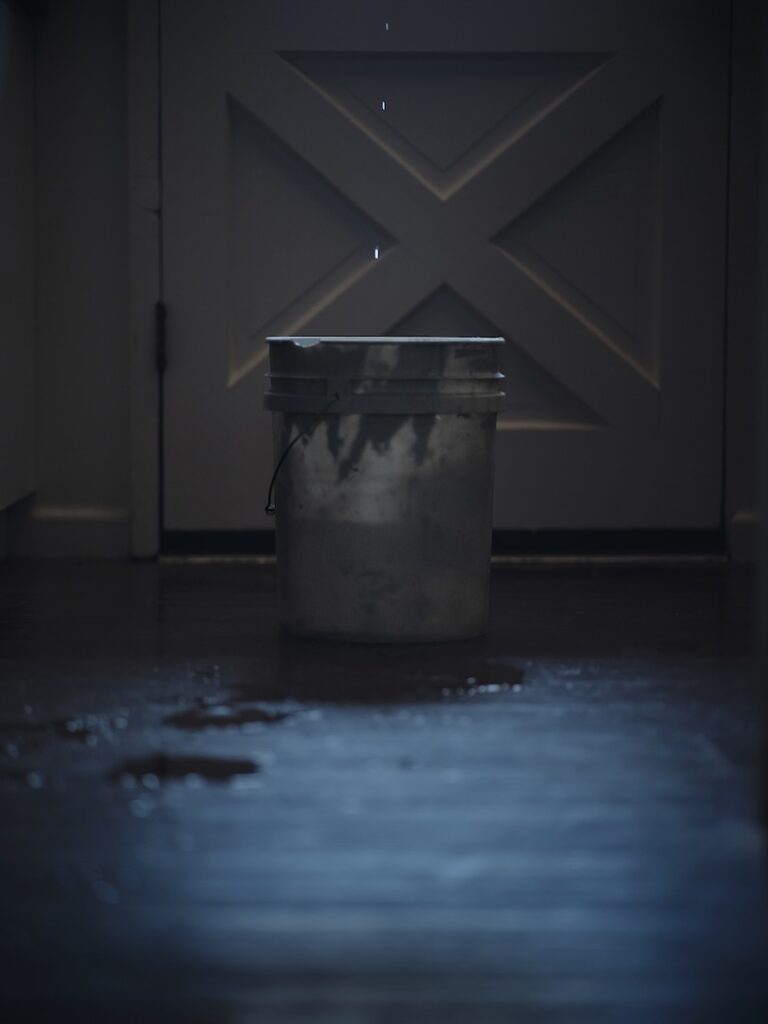
He cannot repair his home—cannot legally complete the work—without a permit from the coastal agency. He cannot get a permit without surrendering to the unconstitutional conditions the coastal agency wants.
And so the house waits, on its stilts, above the sand of Block Island Sound, at the mercy of storms and the State. With PLF’s continued assistance, David will continue to stand—and so will his house.