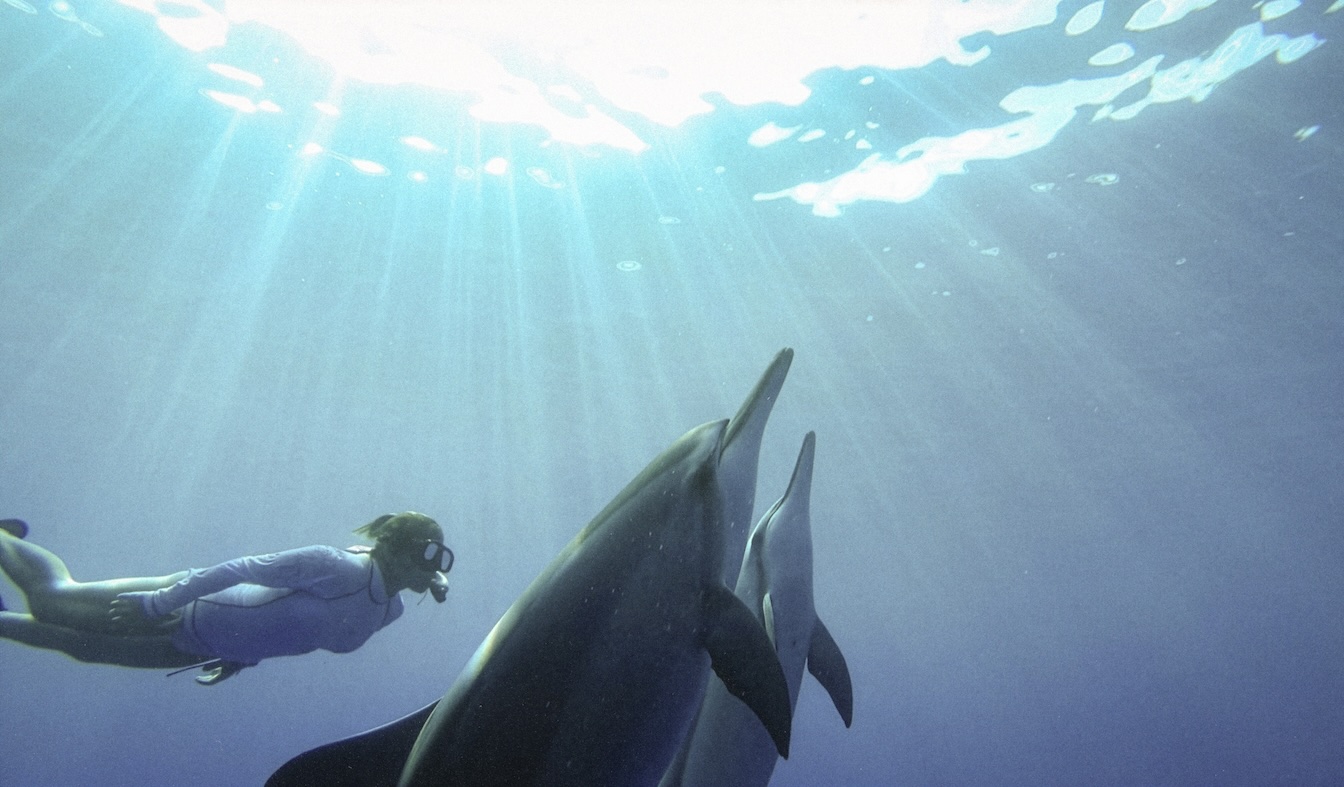

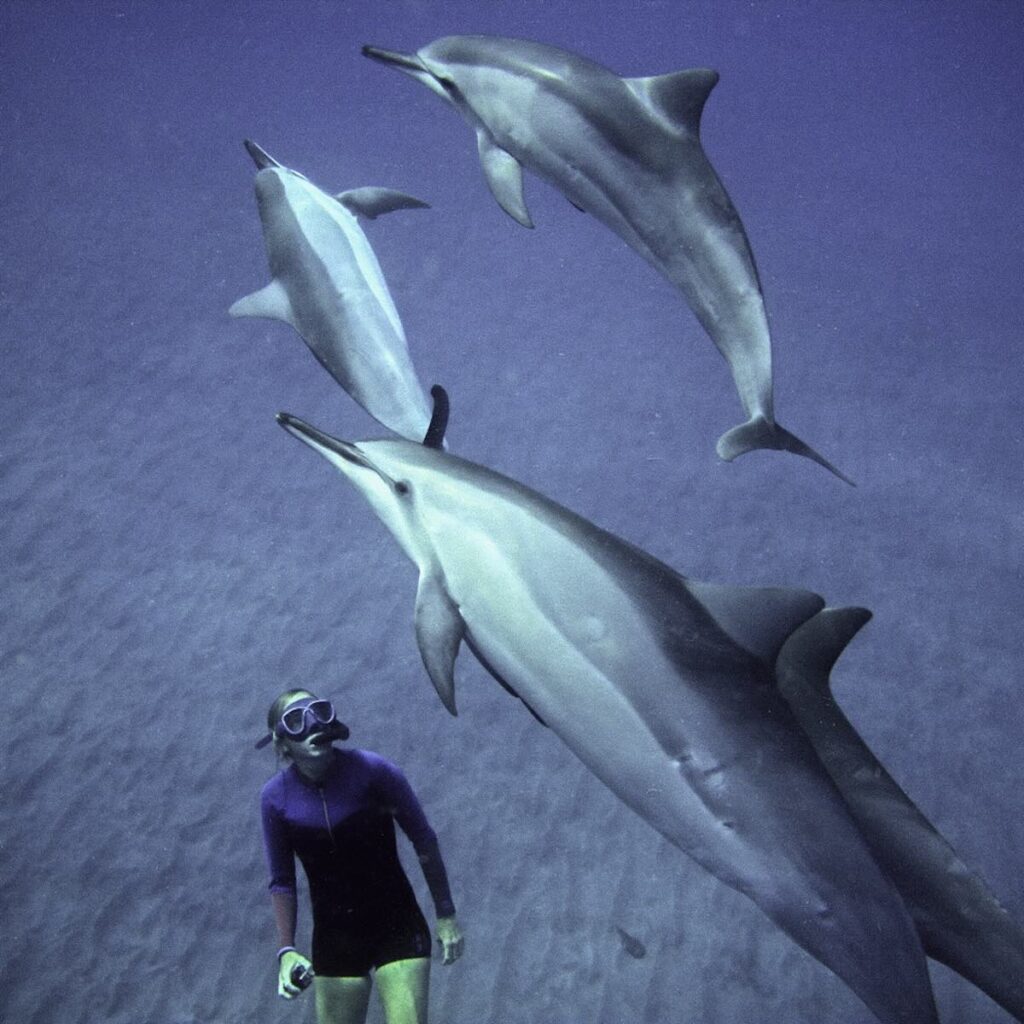
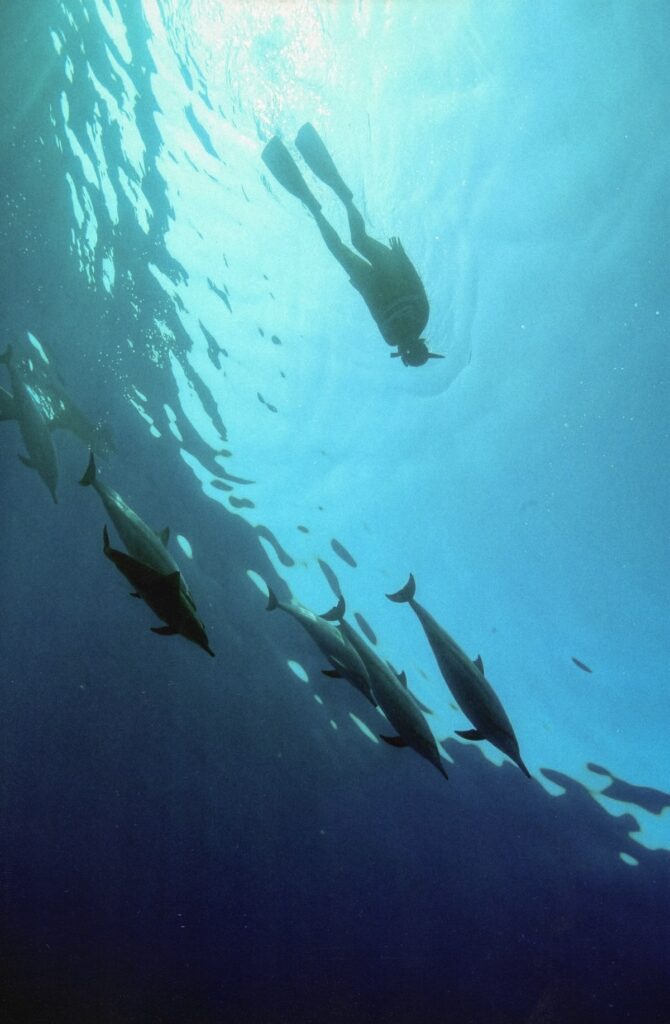
Eliza Wille used to start her therapy sessions by inviting her patients to wade into the crystalline waters off Kona, Hawaii. The ocean was her office. Her co-therapists were spinner dolphins — empathetic, curious, and, apparently, a threat to the republic.
For years, Wille helped people struggling with addiction and depression by using dolphin encounters as experiential therapy. Some people can’t talk about trauma in a sterile office. But in the presence of sleek gray animals clicking and gliding beside them, walls came down. Patients opened up. It was unconventional—but effective.
Then one day, with the flourish of a bureaucratic pen, her career was outlawed.
In 2021, a mid-level employee at the National Oceanic and Atmospheric Administration (NOAA) decided that humans must stay at least 50 yards away from Hawaiian spinner dolphins at all times. If a dolphin swims toward you, you must back away. Failure to retreat could result in a $20,000 fine and a year in jail.
Imagine building your life around helping people heal, only to find your work criminalized by someone whose name you didn’t even know.
This wasn’t an act of Congress. The president didn’t sign it. There was no public debate, no hearing, and no elected official taking a stand one way or the other. A faceless bureaucrat simply issued a decree—and an entire Hawaiian industry vanished beneath the waves.
The dolphins in question aren’t endangered. Even NOAA admits they’re “common and abundant.” Nor had Wille or her peers ever been cited for harming or harassing them. Their sessions followed careful ethical guidelines: they entered the water only when dolphins were active, allowed the animals to initiate contact, and left by midmorning so the pods could rest. These were not reckless thrill-seekers. They were stewards of the animals they loved.
Still, a Washington paper-pusher decided he knew better.
For Wille and Lisa Denning, another Hawaii woman who works as a dolphin guide, the impact was devastating. Wille lost a vital part of her practice and was furloughed by her clinic. Denning’s income dropped by 90 percent. Both women had built careers on connecting people to nature in responsible ways. Suddenly, they were treated like common criminals.
Imagine building your life around helping people heal, only to find your work criminalized by someone whose name you didn’t even know.
With the help of Pacific Legal Foundation, Wille and Denning filed a lawsuit against the government, arguing the new rule was inappropriately implemented. Unfortunately, on the last day of October, the U.S. Fourth Circuit Court of Appeals rejected Wille and Denning’s attempt to overturn a previous ruling against them by a lower Maryland-based court.
This isn’t just bad policy—it’s a constitutional insult. As PLF argued in its court briefs, the Appointments Clause of the U.S. Constitution exists to prevent precisely this sort of thing. Rules that bind the public are supposed to come from “Officers of the United States,” meaning, in general, people appointed by the president and confirmed by the Senate. The idea is simple: if government power is going to upend lives, it should at least be wielded by someone voters can ultimately hold accountable.
But in this case, the rule came from a career bureaucrat who’d never faced Senate scrutiny. NOAA’s administrator, a Senate-confirmed official, had quietly “delegated” his rule-making authority to underlings. In other words, a civil servant, not a constitutional officer, outlawed dolphin therapy. And when Wille and Denning sued, NOAA’s top brass didn’t fix the problem— they doubled down. Then-administrator Rick Spinrad simply rubber-stamped the same rule and told the courts to go away.
This is the trick of modern governance: when citizens challenge an agency’s overreach, the bureaucracy moves the pea under a different shell. “Oh, that wasn’t the administrator,” they say. “It was the deputy.” Then, when the deputy is sued, they shrug and point back to the administrator. It’s a self-licking ice cream cone of unaccountability.
If this maneuver is successful, the implications extend far beyond dolphins. It means unelected staffers in any agency, from the EPA to the IRS, could make life-altering rules without facing a single confirmation hearing or vote. Congress becomes a decorative institution, like an antique Civil War-era firearm; still on display, but no longer useful.
The framers of the Constitution weren’t naïve about power. They knew people in government would always seek to expand their reach, which is why they built layers of accountability into our system of government. Senators confirm presidential appointees because they represent the public’s check on those who write and enforce the rules. When that process is ignored, we don’t get democracy—we get paperwork tyranny.
What has been lost in all this legal maneuvering is the people at the center of it. Wille and Denning aren’t trying to unleash chaos on the seas. They just want to continue practicing their trades responsibly—helping people heal, connecting them to nature, and yes, letting dolphins be dolphins.
They’re the sort of small-business owners Americans say they support: entrepreneurial, ethical, and passionate about their work. But Washington treats them as nuisances to be managed, not citizens to be respected.
This attitude—the notion that distant officials always know best—has crept into every corner of public life. It’s how we end up with national regulations that make sense in theory but crush livelihoods in practice. It’s also why people increasingly distrust government: when your fate can be decided by a nameless functionary who answers to no one, “self-government” starts to sound like a punchline.
This isn’t about left or right, pro-dolphin or anti-dolphin. It’s about whether Americans still live under a government of consent, or one run by the unelected clerks who treat the Federal Register like their personal diary. Every time an agency bypasses constitutional process, the distance between the people and their government grows wider.
In Hawaii, that distance is literal — there are nearly 5,000 miles between the island waters and the Washington office building where this rule was drafted. A single bureaucrat sitting behind a desk thousands of miles away decided that Hawaii’s therapists, boat captains, and guides would no longer be allowed to do what they love. No input from locals, no evidence of harm—just the cold confidence of someone who will never meet the people whose lives he upended.
It’s easy to laugh at “therapy dolphins” as a punchline, but the principle at stake isn’t funny. When unelected officials can outlaw harmless human joy, they’ll find no shortage of targets. Today it’s dolphins; tomorrow it’s something else — a new rule, another “safety” justification, another small liberty erased by someone who’ll never face a ballot.
Wille and Denning aren’t radicals. They’re ordinary professionals asking for the extraordinary privilege of earning a living without Washington’s permission. They’re not demanding anarchy in the oceans; they’re demanding accountability on land.
The tragedy here is philosophical. Government should protect citizens from harm, not from happiness. The bureaucrat who wrote this rule didn’t save any dolphins; he merely criminalized compassion. He replaced empathy with enforcement, turning acts of connection into acts of defiance.
With the Fourth Circuit’s unfavorable ruling, it is unknown whether Wille might once again take her patients into the sea, and whether Lisa Denning might once again guide curious swimmers through the blue shallows. The dolphins will continue to do what they’ve always done — spin, play, and remind us that freedom, like joy, shouldn’t have to ask permission.